Veterans · Active-Duty · Military Spouses · Women's Only

Treatment for Veteran & Military Women

A specialty track for women veterans, active-duty servicewomen, and military spouses navigating recovery alongside service-related trauma, substance use, and mental health conditions.

  • Joint Commission Accredited
  • EMDR-Credentialed
  • Coordinates with VA Care
  • Female-Founded

A woman in a military jacket working confidently on her laptop
Anchored tides saved my life. I had been to an inpantient facility before and my sobriety wasn't lasting, until I found this place. I enjoyed the different groups and the staff and women are so welcoming. I felt so comfortable here, which I hadn't felt before. I now have the confidence to succeed in life. Very thankful for this place.
Brenna Boudreau
Read all reviews on Google

What to know about our Veterans & Military track

  1. A women-only outpatient specialty trackfor adult women with military service histories — veterans, active-duty, reserve, National Guard, and military spouses.

  2. Trauma-informed and EMDR-credentialedfor service-related PTSD, military sexual trauma, combat trauma, and the moral injury that often travels with them.

  3. Integrated with substance use, mental health, and eating disorderstreated as one picture, not three separate referrals — the way recovery actually works for military women.

  4. Coordinates with VA care when applicablewe work alongside the VA. We don't replace it. The goal is integration, not duplication.

  5. Available across PHP, IOP, and outpatientcalibrated to where she is clinically and what her duty, family, or transition schedule allows.

Why a dedicated track for military women

The service piece and the gender piece — without choosing which one gets prioritized.

Women in military service experience trauma, substance use, and mental health conditions at rates that diverge sharply from civilian women — and from male service members. MST, deployment-related PTSD, TBI, and the cultural pressures of being a woman in a male-dominated environment shape what recovery has to address. So does the quieter weight of identity: the way service can become the thing that defines a woman.

See what we treat in this track
A woman in military camo holding her daughter close on a sofa, both smiling

Who this track is for

A woman doesn't need a combat record, a specific MOS, or a particular diagnosis.

What she needs is a treatment team that recognizes service as part of her clinical picture. The track is built for:

  • Women veterans across all eras of service and all branches.
  • Active-duty servicewomen seeking outpatient support that works around a duty schedule.
  • Reserve and National Guard members navigating the layered demands of part-time service.
  • Military spouses carrying relocation, deployment cycles, single-parenting through tours, and the trauma that ripples through a military family.
  • Women in transition — recently separated, recently retired, recently discharged, or in the middle of figuring out what civilian life looks like.

When another level of care is needed first

We work alongside VA care — and we refer out when something else is needed.

  • Need medically supervised withdrawal? We refer to a trusted detox partner first, and pick up the work once you're stable.
  • Need a residential setting? We coordinate with residential partners and pick up at PHP or IOP when you're ready for outpatient.
  • Active acute crisis? The Veterans Crisis Line is staffed 24/7 by responders trained in military and veteran experience.

We work alongside VA care when appropriate. We do not replace it.

What we treat in the Veterans & Military track

The picture military women carry — treated as one story, not separate referrals.

Veteran, active-duty, or military spouse?

A confidential conversation can help figure out whether our specialty track fits — and how it works alongside VA care if that's part of your picture.

Confidential. No obligation. Most major PPO plans accepted.

Levels of care

The Veterans & Military track runs across our outpatient continuum.

Calibrated to where a woman is clinically and what her duty schedule, family, or transition allows. PHP is the highest level we offer; IOP is the structured step-down; OP is the long-horizon maintenance level.

  • Highest outpatient

    PHP

    For higher-acuity presentations or recent stabilization needs. Intensive individual and group therapy, dietitian and psychiatric care.

    Often where trauma stabilization gets laid before deeper processing.

    Read about PHP
  • Sustainable cadence

    IOP

    Structured treatment at a pace that fits a duty schedule, a family, or a transition — often the step-down point from PHP.

    Many women begin EMDR here, after foundational stabilization.

    Read about IOP
  • Long horizon

    OP

    Long-term clinical support, relapse prevention, and continued trauma processing — with continuity of clinician from earlier levels.

    The relationship doesn't reset when the cadence lightens.

    Read about OP

Insurance coverage for veteran & military women

Most major commercial plans cover behavioral health treatment for veterans, active-duty servicewomen, and military spouses, including trauma-focused modalities like EMDR.

We are happy to verify your benefits prior to any commitment and let you know what your plan covers. Please note: we do not accept Medi-Cal or Medicaid.

In-Network

PPO, HMO, and EPO accepted

Major PPOs Accepted

Out-of-network

Not sure if you’re covered? Verify your insurance in 2 minutes

A woman in military camo sitting with her two children, an American flag draped on the sofa beside them

Why military women choose Anchored Tides

Service-aware. Women-only. Trauma-informed as the orientation.

  • Military-aware, women-only

    Generic women's behavioral health misses the service piece. Generic veterans' care wasn't built for women. This track holds both, without asking her to choose.

  • EMDR-credentialed clinicians

    A credential we worked to earn. One of the modalities most associated with meaningful change in service-related trauma.

  • Coordinates with VA care

    We work alongside the VA, not against it. Many of the women we treat use both systems in tandem and we help structure how the two fit.

  • Service as part of the clinical picture

    A woman doesn't need a combat record or a particular diagnosis to be a fit. She needs a team that recognizes service as part of her story.

  • Spouses and service members both

    Military families carry their own version of the experience. The track is designed to hold both service members and military spouses.

  • Female-founded, female-led

    Becca Edge (CEO/Co-Founder), Amy Dutton (Co-Founder), and Clinical Director Zoe Tambling, LMFT. Joint Commission accredited · DHCS License #300386AP.

Our Huntington Beach location

Anchored Tides Recovery

19126 Magnolia St #101
Huntington Beach, CA 92646
(866) 329-6639

Service areas

Women across Orange County and the Southern California coast.

Veterans, active-duty servicewomen, and military spouses travel in from Newport Beach, Costa Mesa, Huntington Beach, and the wider Southern California coast for our specialty track.

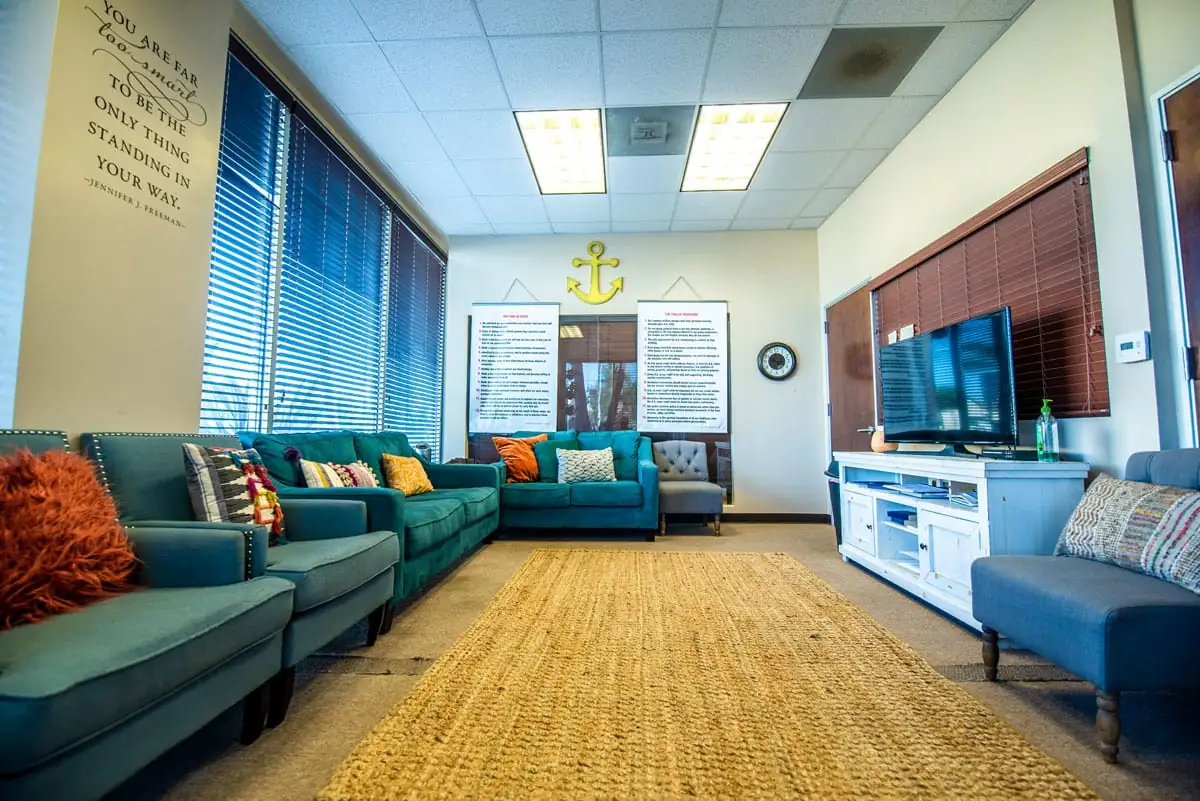
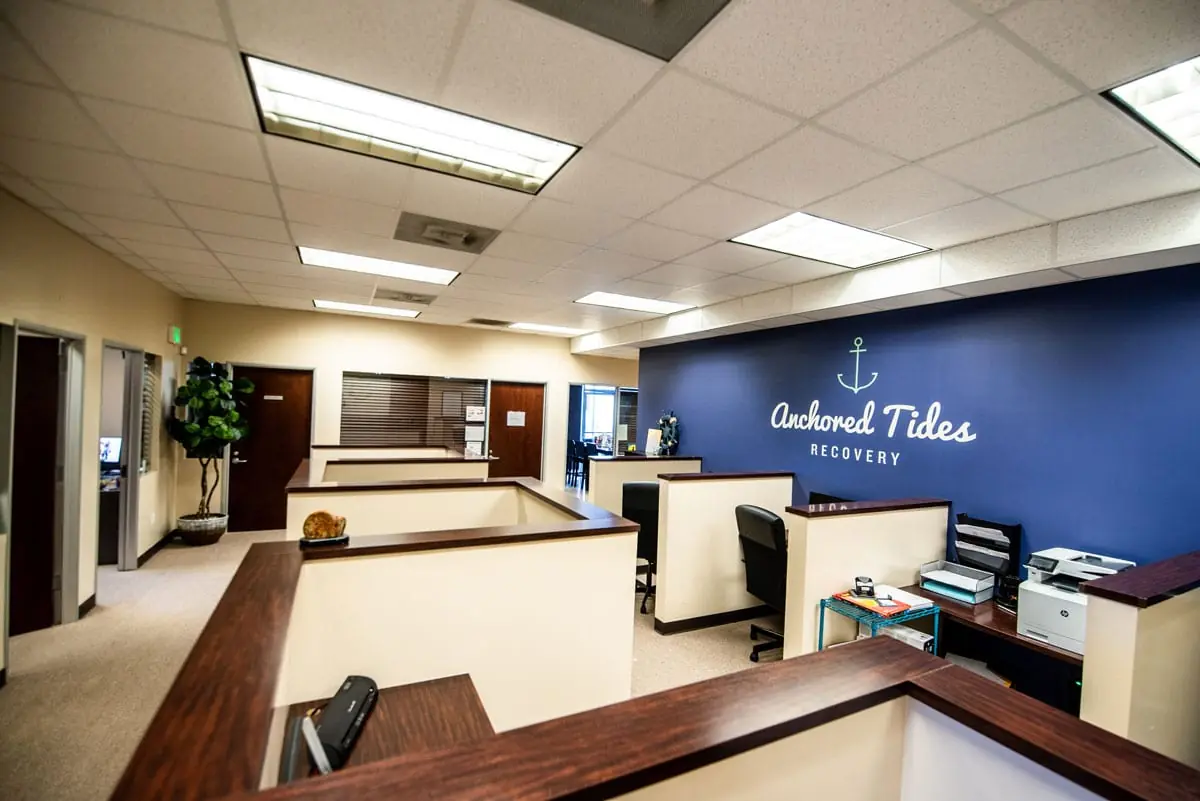
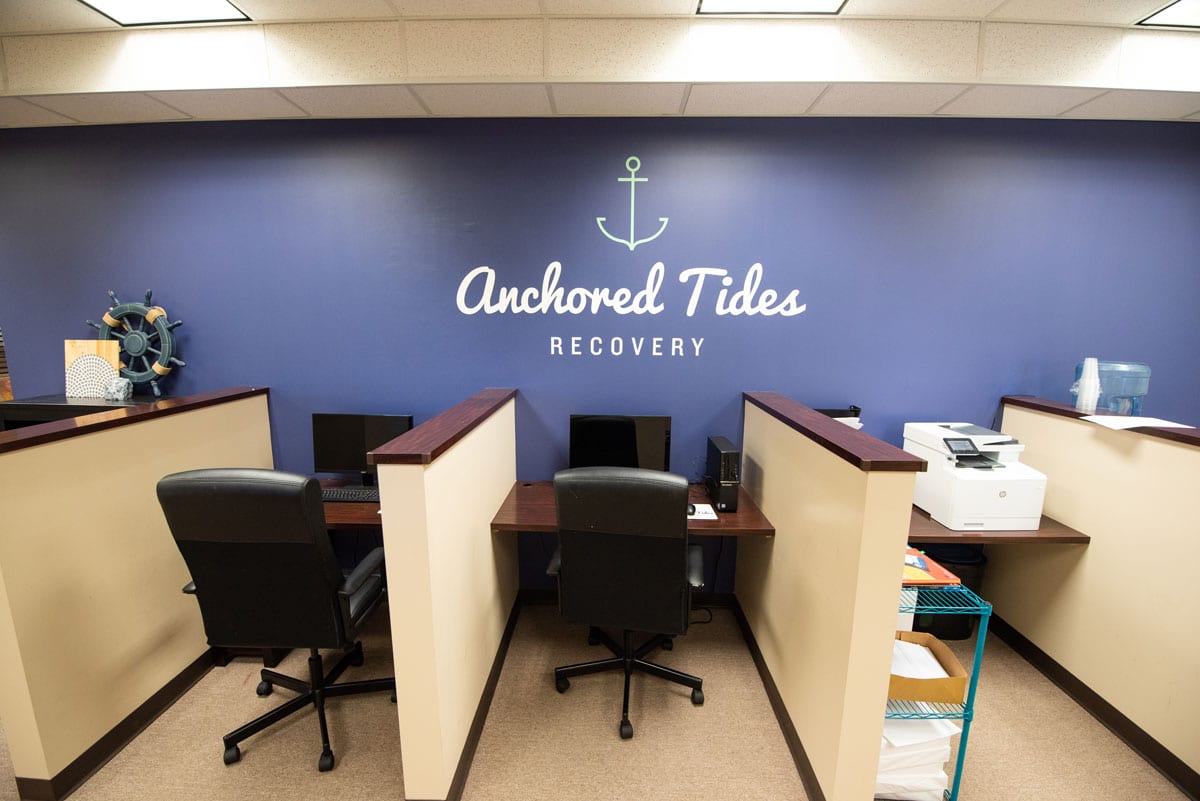
Group therapy room with comfortable seatingQuiet therapy room at Anchored Tides RecoveryQuiet therapy room entrance at Anchored Tides RecoveryAnchored Tides Recovery reception and office areaArt table with chalkboard wall — “I am enough”Anchored Tides Recovery workstations

Where the work happens

“Rooms structured so service can stay part of her story — without being all of it.”

Frequently Asked Questions

Frequently Asked Questions

  • Our admissions team can verify your specific coverage and walk through options when you call. We are happy to verify your benefits prior to any commitment and let you know what your plan covers.

Evidence & accountability

Sources and clinical review

This page was reviewed by Zoe Tambling, LMFT on . The references below informed the specific topics noted with each citation.

  1. The PTSD Clinical Practice GuidelineU.S. Department of Veterans Affairs and Department of Defense. Published January 1, 2023Supports: Evidence-based PTSD care for veterans and service members
  2. Treatment and RecoveryNational Institute on Drug Abuse. Published January 1, 2020Supports: Individualized substance-use treatment and recovery support
  3. Mental Health and Substance Abuse CoverageHealthCare.gov. Published January 1, 2024Supports: Behavioral-health coverage requirements and the need to confirm benefits with the individual plan