Trauma-Informed · EMDR-Credentialed · Women's Only

Trauma-Informed Care for Women — Including EMDR

Trauma is a core orientation at Anchored Tides — not an add-on. Our clinicians are credentialed in EMDR and integrate it with DBT, CBT, and somatic approaches to address the root, not just the symptoms.

  • Joint Commission Accredited
  • EMDR-Credentialed
  • DHCS License #300386AP
  • Female-Founded

A woman meditating peacefully by the ocean — stillness and coastal healing
Anchored tides saved my life. I had been to an inpantient facility before and my sobriety wasn't lasting, until I found this place. I enjoyed the different groups and the staff and women are so welcoming. I felt so comfortable here, which I hadn't felt before. I now have the confidence to succeed in life. Very thankful for this place.
Brenna Boudreau
Read all reviews on Google

What to know about trauma-informed care

  1. Trauma-informed care is a clinical orientationrunning through every level of care we offer — PHP, IOP, and outpatient — not a workshop or a separate track.

  2. Our clinicians are credentialed in EMDRone of the most evidence-based protocols for trauma, recommended by the WHO, APA, and the Department of Veterans Affairs.

  3. Integrated with the rest of treatmenttrauma work alongside substance use, mental health conditions, disordered eating, and dual-diagnosis care — one picture, one team.

  4. Groups are designed to avoid retraumatizationno forced disclosure. The room is structured to make safety the default and disclosure the choice.

  5. Covered by most major commercial PPO planswe verify each woman's benefits before her first session and don't push processing faster than her nervous system can integrate.

What trauma-informed care actually looks like

Not a workshop. Not a webpage. A clinical practice.

“Trauma-informed” gets used loosely in behavioral health. We treat it as a set of specific practices: every clinician understands how trauma shapes substance use and mental health. Groups are designed to avoid retraumatization. Treatment plans address what happened, not just what's showing up now. Modalities are chosen for what trauma actually responds to.

See the modalities we use
Four women standing close together, supporting one another in a softly lit room

Who Trauma-Informed Care Is For

Women whose recovery has something underneath it.

Most of the women in our trauma-informed care don't arrive with a tidy diagnostic picture. They arrive with a story:

  • Women with PTSD, complex PTSD (C-PTSD), or relational trauma — the kind that accumulates over years rather than landing in a single event.
  • Women whose substance use took root as a way to manage trauma symptoms, and now they need both addressed at once.
  • Women who have minimized what happened to them because “someone else had it worse” — and want a clinical home that doesn't require them to.
  • Veterans, active-duty women, and military spouses carrying combat trauma, MST, or the relational fallout that follows military service.
  • Women whose depression, anxiety, or disordered eating sits on top of an unprocessed trauma history.

When this isn't the right starting point

Trauma processing requires stability first.

  • Need medically supervised withdrawal? We'll refer to a trusted detox partner first and begin trauma work once you're stable.
  • Need a residential setting? We coordinate with residential partners and pick up trauma work at PHP or IOP when you're ready.
  • Very early in recovery? Foundational work — safety, skills, and grounding — typically comes before deeper EMDR processing.

We don't rush women into EMDR when the clinical picture calls for something else first.

Trauma-informed across every level of care

Trauma-informed care isn't a track at Anchored Tides.

It's how the entire program is built — and it follows a woman through every level of care she moves through.

  • Foundation

    PHP

    Intensive trauma-informed individual and group work, with EMDR available when clinically appropriate.

    Often where the foundation gets laid — stabilization, safety, and the early phases of processing.

    Read about PHP
  • Sustainable cadence

    IOP

    Structured trauma work at a pace that fits real life. Many women begin EMDR here after foundational stabilization.

    The structure to support deeper processing without full-time treatment.

    Read about IOP
  • Long horizon

    OP

    Long-term trauma processing and maintenance — with continuity of clinician from earlier levels of care.

    The relationship doesn't reset when the cadence lightens.

    Read about OP

Wondering if trauma work is part of what you need?

For most of the women we treat, the answer is yes — even when trauma isn't what brought them to the call.

Confidential. No obligation. Most major PPO plans accepted.

Insurance coverage for trauma-informed care

Most major commercial plans cover trauma-informed mental health and substance use treatment, including EMDR.

We are happy to verify your benefits prior to any commitment and let you know what your plan covers. Please note: we do not accept Medi-Cal or Medicaid.

In-Network

PPO, HMO, and EPO accepted

Major PPOs Accepted

Out-of-network

Not sure if you’re covered? Verify your insurance in 2 minutes

Three women gathered around a woman covering her face — gentle hands on her shoulders

Why women choose Anchored Tides for trauma work

Trauma as context — not as a category.

  • An orientation, not a workshop

    Trauma-informed care is the lens through which every session is conducted — not a single training module bolted onto staff onboarding.

  • EMDR-credentialed clinicians

    A credential we worked to earn. Not every program offering “trauma therapy” can claim it; we built the investment into our clinical model.

  • Groups designed to avoid retraumatization

    No forced disclosure. No pressure-cooker confrontation. Safety is the default; sharing is the choice.

  • Modalities chosen for what trauma responds to

    Not what's easiest to deliver. EMDR is harder to provide than ordinary talk therapy — and more effective for many women.

  • Treated as context, not a category

    We don't treat trauma as a category of patient. We treat it as the context that explains the rest of the story.

  • Continuity across levels of care

    Stepping from PHP to IOP to outpatient doesn't reset the clinical relationship — the same team continues the work as the cadence lightens.

Our Huntington Beach location

Anchored Tides Recovery

19126 Magnolia St #101
Huntington Beach, CA 92646
(866) 329-6639

Service areas

Women across Orange County and the Southern California coast.

Most women travel in from Newport Beach, Costa Mesa, Huntington Beach, and the wider Southern California coast for trauma-informed care.

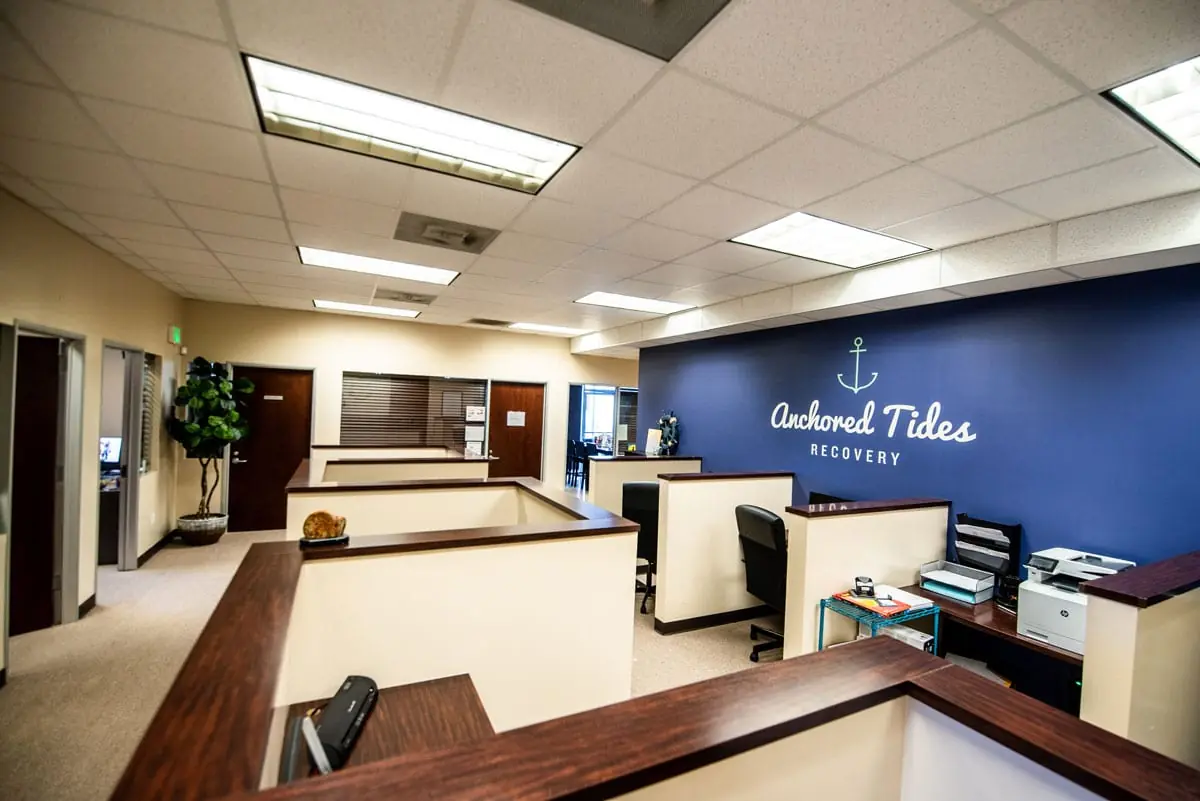
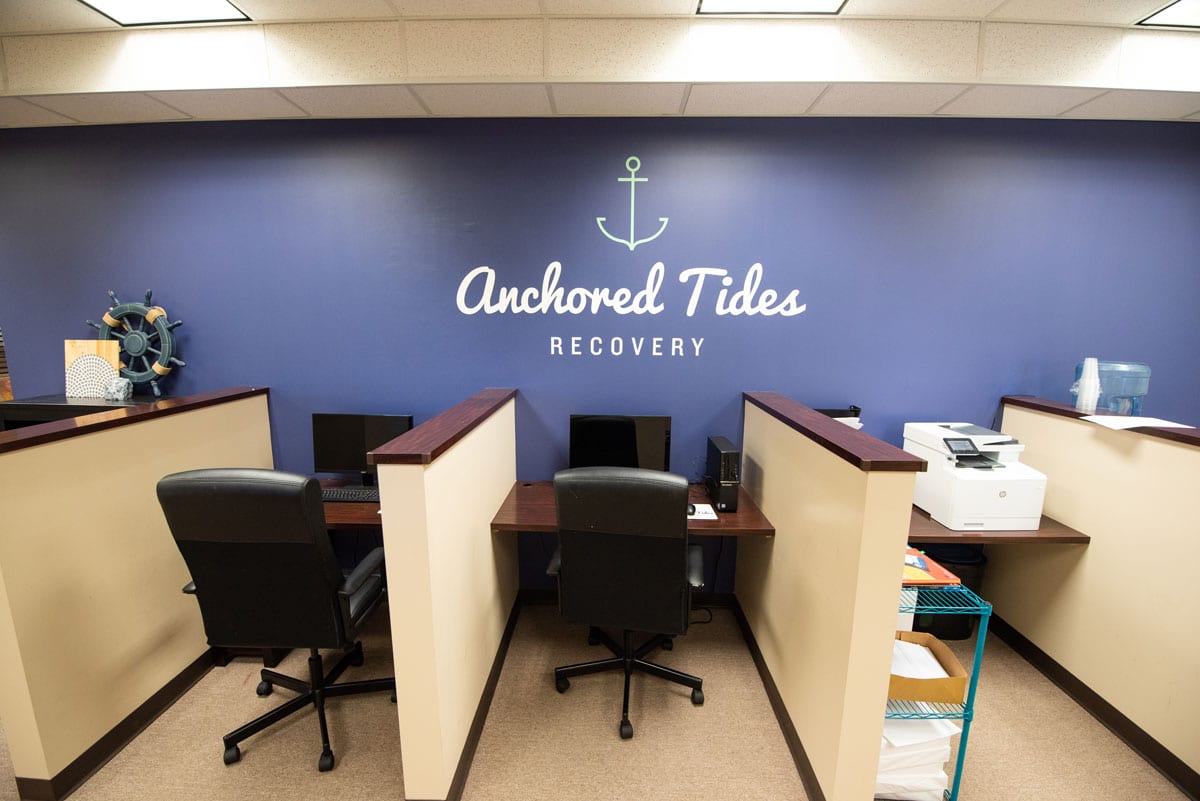
Group therapy room with comfortable seatingQuiet therapy room at Anchored Tides RecoveryQuiet therapy room entrance at Anchored Tides RecoveryAnchored Tides Recovery reception and office areaArt table with chalkboard wall — “I am enough”Anchored Tides Recovery workstations

Where the work happens

“Rooms structured to make safety the default and disclosure the choice.”

Frequently Asked Questions

Frequently Asked Questions

  • EMDR (Eye Movement Desensitization and Reprocessing) is an evidence-based trauma therapy that uses bilateral stimulation — typically guided eye movements — to help the brain reprocess traumatic memories. It's one of the most well-researched trauma protocols available and is recommended by the World Health Organization, the American Psychiatric Association, and the Department of Veterans Affairs. Our clinicians are credentialed in EMDR.

Evidence & accountability

Sources and clinical review

This page was reviewed by Zoe Tambling, LMFT on . The references below informed the specific topics noted with each citation.

  1. Trauma-Informed Care in Behavioral Health Services (TIP 57)Substance Abuse and Mental Health Services Administration. Published January 1, 2014Supports: Trauma-informed principles and behavioral-health treatment planning
  2. The PTSD Clinical Practice GuidelineU.S. Department of Veterans Affairs and Department of Defense. Published January 1, 2023Supports: Evidence-based assessment and treatment considerations for PTSD
  3. Mental Health and Substance Abuse CoverageHealthCare.gov. Published January 1, 2024Supports: Behavioral-health coverage requirements and the need to confirm benefits with the individual plan