Disordered Eating · Nutritionist Support · Women's Only

Disordered Eating Treatment for Women — With Nutritionist Support

A specialty track for women navigating an eating disorder alongside substance use, trauma, or mental health concerns. Clinical therapy plus Registered Dietitian support for meal planning, accountability, and nutritional rebuilding.

  • Joint Commission Accredited
  • Registered Dietitian on Team
  • DHCS License #300386AP
  • Female-Founded
Women sharing a relaxed, nourishing meal together in a warm, supportive setting
Anchored tides saved my life. I had been to an inpantient facility before and my sobriety wasn't lasting, until I found this place. I enjoyed the different groups and the staff and women are so welcoming. I felt so comfortable here, which I hadn't felt before. I now have the confidence to succeed in life. Very thankful for this place.
Brenna Boudreau
Read all reviews on Google

What to know about our eating disorders track

  1. A women-only outpatient specialty trackfor adult women navigating anorexia, bulimia, binge eating disorder, and OSFED — clinically significant from any starting point.

  2. Registered Dietitian on the clinical teammeal planning, grocery support, and nutritional rebuilding that integrates directly with therapy — not a separate referral.

  3. Integrated with substance use, trauma, and mental healththe eating disorder is rarely the only story. We treat the picture, not the diagnosis in isolation.

  4. Outpatient — not residential or medical stabilizationwomen who need higher medical care are flagged at assessment and referred to the appropriate provider before any outpatient work begins.

  5. Covered by most major commercial PPO plansincluding dietitian sessions when they're part of a coordinated clinical plan. Benefits verified before her first session.

The picture isn't always what you'd expect

She might be at a weight that doesn't alarm a doctor. That isn't what determines clinical significance.

For many of the women we treat, the eating disorder doesn't look the way the cultural image suggests. She might have been functioning, achieving, parenting, and showing up for years while the eating disorder quietly ran the background of her life. The clinical significance isn't determined by appearance — it's determined by what the relationship with food, body, and eating is doing to her.

See what we treat
A fork resting against a yellow measuring tape

What we treat

Adult women navigating eating disorders — across the full diagnostic picture.

Our eating disorders track supports adult women navigating:

  • Anorexia nervosa — restrictive eating, weight loss, and the cognitive distortions around food, body, and worth that drive the restriction.
  • Bulimia nervosa — cycles of binge eating followed by compensatory behaviors including purging, restriction, or over-exercise.
  • Binge eating disorder (BED) — recurrent episodes of eating large quantities of food with a sense of loss of control, without consistent compensatory behaviors.
  • Other Specified Feeding or Eating Disorder (OSFED) — clinically significant patterns that don't meet full criteria for a specific diagnosis but still impair functioning.
  • Co-occurring substance use, trauma, anxiety, depression, or grief — where the eating disorder is closely tied to emotional regulation, control, or self-protection.
  • Body image distress and nutritional rebuilding after long-standing patterns have left the body undernourished or dysregulated.

When outpatient isn't the right level of care

We're an outpatient behavioral health program — not medical stabilization.

  • Medically unstable? Significantly compromised vital signs, severe malnutrition, or other medical instability require a higher level of medical care first.
  • Need residential eating disorder care? We refer to the appropriate residential provider before any outpatient work begins.
  • Stepping down from a higher level? We can pick up the work in PHP or IOP once you're medically stable and appropriate for outpatient programming.

Our admissions team flags this during assessment — and we refer out before we ever begin outpatient work.

What the Registered Dietitian adds

Most outpatient women's programs leave nutrition to the woman to figure out. We don't.

A Registered Dietitian is part of our clinical team, and her work integrates directly with the rest of treatment rather than running on a separate track.

  1. Meal planning that fits real life

    Not idealized plans — the kind a woman can actually follow on a Tuesday with two kids and a full inbox.

  2. Grocery support and accountability

    Including the aisles of the store that have historically been the hardest to walk down.

  3. Nutritional rebuilding

    Gradual reintroduction of foods, food groups, and eating cadences after restrictive or undernourished patterns.

  4. Direct coordination with therapy

    Food-related triggers, body image work, and the emotional content underneath behaviors — one team, one plan.

  5. Education on what eating in recovery looks like

    Not abstinence. Not perfection. Not a new set of rigid rules. Sustainable, flexible, lived-in eating.

Eating disorder behavior doesn't shift in a therapy room alone. It shifts in the kitchen, the restaurant, the grocery store, and the family dinner table. Dietitian work alongside therapy is, in our experience, what makes the change stick.

Levels of care for eating disorders

Eating disorders treatment runs across our outpatient continuum.

Calibrated to where a woman is clinically. PHP is the highest level of care we offer; IOP is the structured step-down or entry point; OP is the long-horizon maintenance level.

  • Highest outpatient

    PHP

    For women with higher-acuity eating disorder presentations who are medically cleared for outpatient programming.

    Intensive individual and group therapy, dietitian support, and psychiatric care.

    Read about PHP
  • Structured step-down

    IOP

    Reduced weekly hours — often the step-down from PHP or the entry point when ED is significant but doesn't require full-day care.

    Therapy and dietitian sessions on a cadence that fits real life.

    Read about IOP
  • Maintenance horizon

    OP

    Lower-frequency clinical and dietitian support for women maintaining recovery, often after stepping down from higher levels.

    The clinician doesn't change when the cadence lightens.

    Read about OP
  1. Step 1

    Clinical assessment

    Eating disorder history and behavior, substance use, mental health, trauma, and medical readiness for outpatient. If outpatient isn't the right level, we refer to the appropriate provider first.

  2. Step 2

    Track placement

    Depending on what's clinically primary, you enter the eating disorders track on its own — or alongside substance use, trauma, or mental health tracks. A clinical decision, not a self-select menu.

  3. Step 3

    Treatment plan

    Individual therapy, women's-only group, EMDR where indicated, psychiatric care, and Registered Dietitian sessions — scheduled into your weekly plan.

  4. Step 4

    Continuum of care

    Most women start in PHP or IOP and step down to outpatient as patterns stabilize. The clinical relationship continues across levels of care; the cadence is what changes.

Wondering if our eating disorders treatment is the right fit?

Our admissions team is trained to walk you through what's clinically appropriate — and what comes next.

Confidential. No obligation. Most major PPO plans accepted.

Insurance coverage for eating disorders treatment

Most major commercial plans cover behavioral health treatment for eating disorders, including dietitian sessions when they're part of a coordinated clinical plan.

We are happy to verify your benefits prior to any commitment and let you know what your plan covers. Please note: we do not accept Medi-Cal or Medicaid.

In-Network

PPO, HMO, and EPO accepted

Major PPOs Accepted

Out-of-network

Not sure if you’re covered? Verify your insurance in 2 minutes

A diverse group of women laughing together in a window-lit room

Why women choose Anchored Tides for ED treatment

Dietitian on the team. Therapy that integrates with the kitchen.

  • Dietitian as part of the clinical team

    Most outpatient women's programs leave nutrition to the woman to figure out. We don't — and we don't outsource it either.

  • Women-only environment

    A dedicated room for the kind of shame around food and body that women rarely speak out loud in mixed-gender settings.

  • Integrated with substance use and trauma

    ED rarely arrives alone. One assessment, one treatment plan, one clinical team — across whichever conditions are in play.

  • Weight monitoring as a clinical decision

    Not a default. For some women it helps; for others, it's counterproductive. The conversation is collaborative and clinically guided.

  • Female-founded, female-led

    Becca Edge (CEO/Co-Founder), Amy Dutton (Co-Founder), and Clinical Director Zoe Tambling, LMFT.

  • Accredited and licensed

    Joint Commission accredited · NAATP member · DHCS License #300386AP.

If you or someone you love is in immediate crisis

Call or text 988 to reach the Suicide and Crisis Lifeline, or call 911. For eating disorder–specific support outside of an active crisis, the National Alliance for Eating Disorders Helpline is reachable at 1-866-662-1235.

Anchored Tides is not a 24/7 crisis line. For non-emergency admissions and clinical questions, call us at (866) 329-6639.

Our Huntington Beach location

Anchored Tides Recovery

19126 Magnolia St #101
Huntington Beach, CA 92646
(866) 329-6639

Service areas

Women across Orange County and the Southern California coast.

Most women travel in from Newport Beach, Costa Mesa, Huntington Beach, and the wider Southern California coast for our eating disorders track.

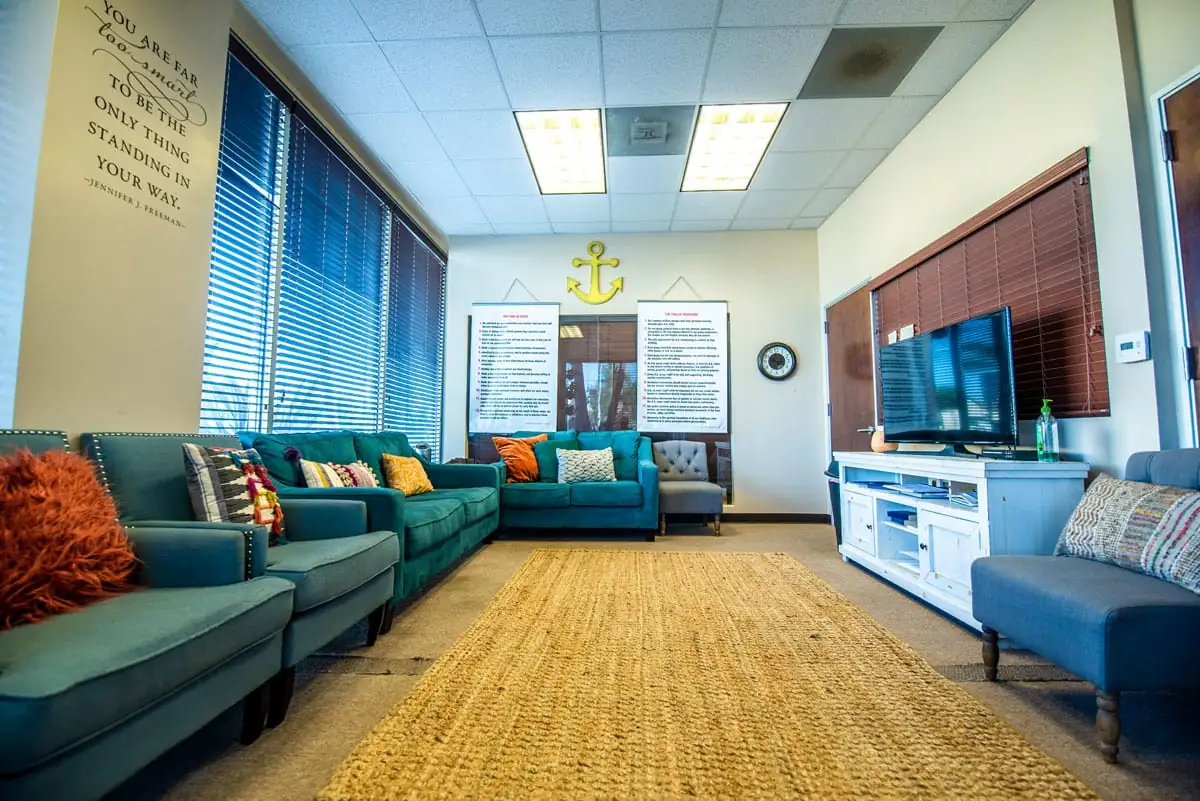
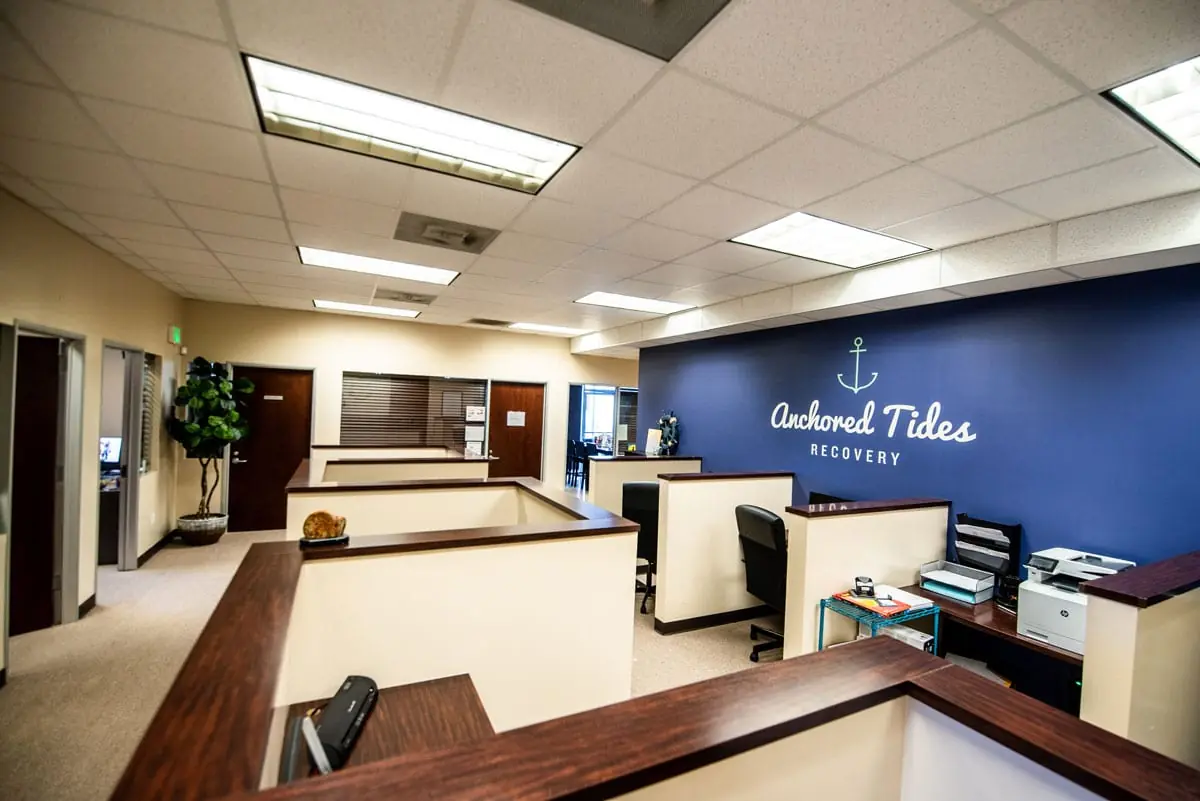
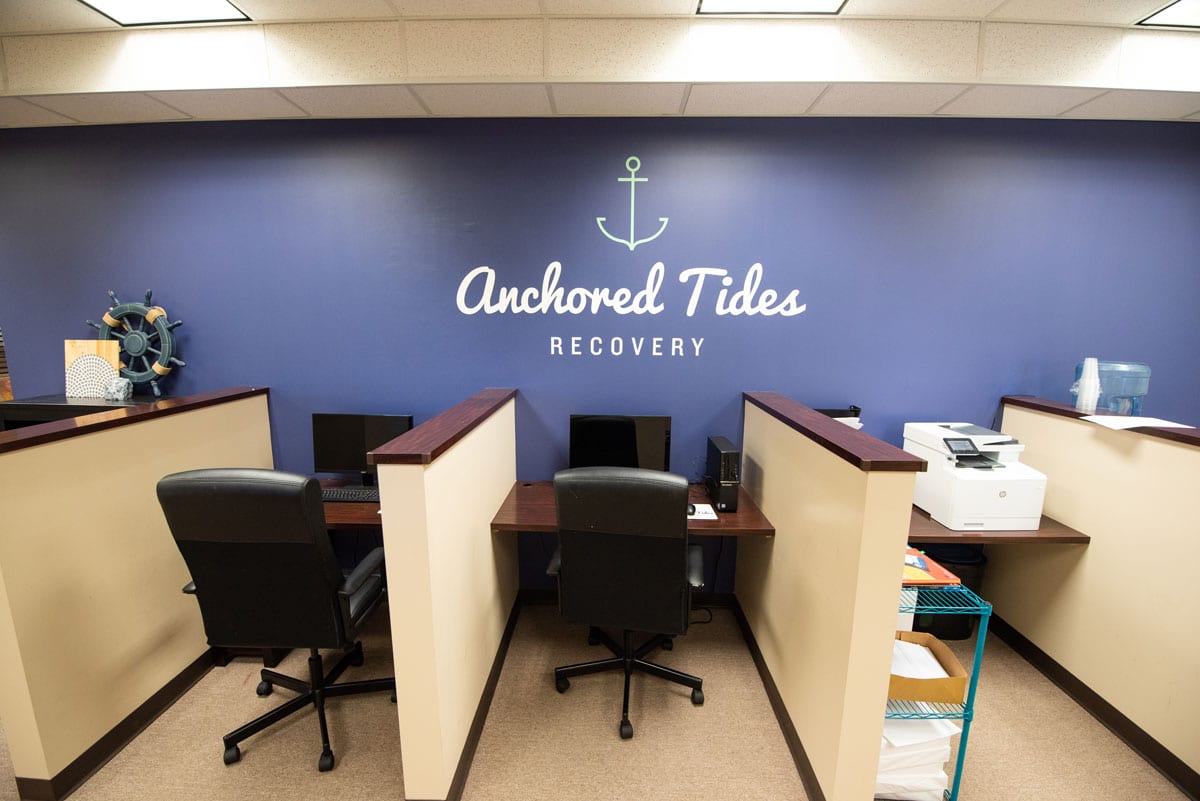
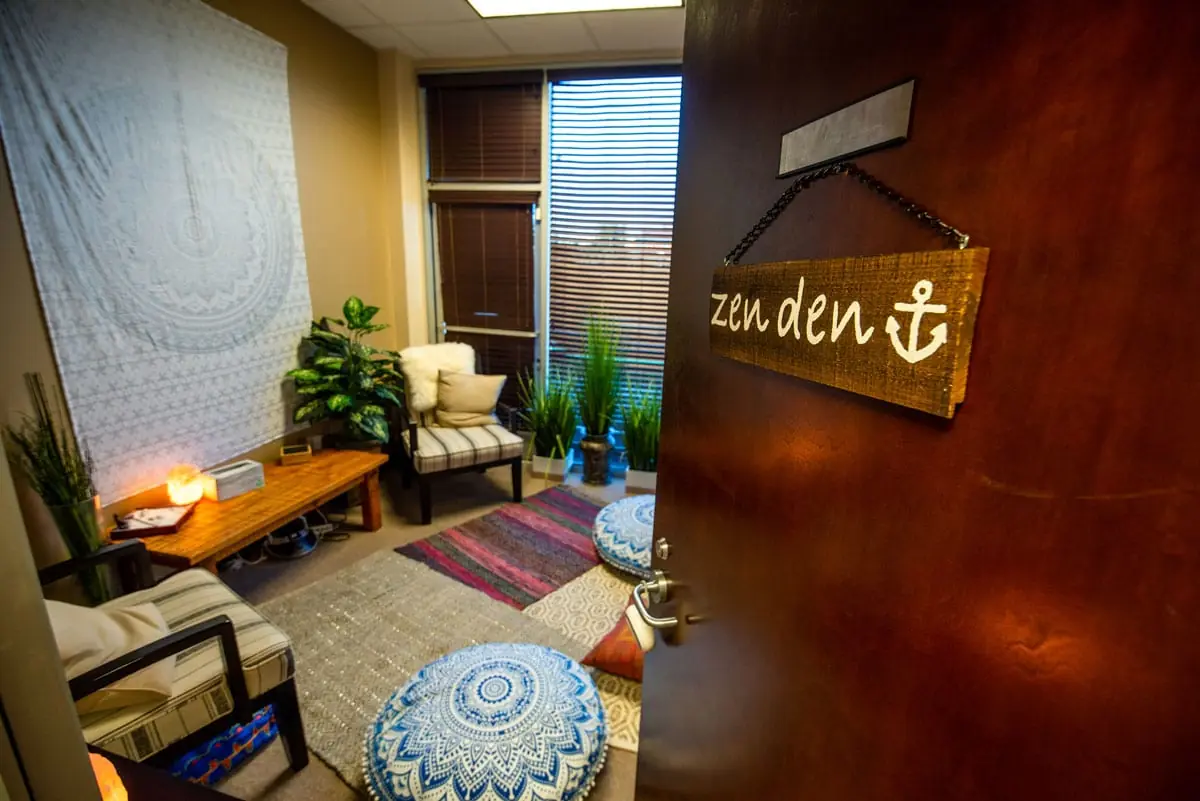
Group therapy room with comfortable seatingQuiet therapy room at Anchored Tides RecoveryQuiet therapy room entrance at Anchored Tides RecoveryAnchored Tides Recovery reception and office areaArt table with chalkboard wall — “I am enough”Anchored Tides Recovery workstations

Where the work happens

“Dining room, therapy room, kitchen, group — the spaces where eating in recovery actually settles in.”

Frequently Asked Questions

Frequently Asked Questions

  • No. Many women in this track present with eating disorder behaviors that don't yet meet full diagnostic criteria but are still clinically significant and worth treating. Diagnosis is part of the clinical assessment, not a prerequisite for the first conversation. If the food, the body, or the behavior is shaping your life in ways you don't want it to, that's enough of a reason to reach out.

Evidence & accountability

Sources and clinical review

This page was reviewed by Zoe Tambling, LMFT on . The references below informed the specific topics noted with each citation.

  1. Eating DisordersNational Institute of Mental Health. Published January 1, 2024Supports: Eating-disorder symptoms, treatment, and the importance of professional care
  2. Practice Guideline for the Treatment of Patients With Eating DisordersAmerican Psychiatric Association. Published January 1, 2023Supports: Evidence-based assessment and treatment planning for eating disorders
  3. Mental Health and Substance Abuse CoverageHealthCare.gov. Published January 1, 2024Supports: Behavioral-health coverage requirements and the need to confirm benefits with the individual plan