Co-Occurring Disorders · Women's Only · Orange County

Dual-Diagnosis / Co-Occurring Disorders Treatment for Women

Integrated outpatient treatment for women whose substance use is intertwined with a mental health condition — depression, anxiety, PTSD, bipolar disorder, BPD, or ADHD. One plan, one team, one woman.

  • Joint Commission Accredited
  • NAATP Member
  • DHCS License #300386AP
  • Female-Founded
A counselor offering compassionate, focused support to a woman in therapy
Anchored tides saved my life. I had been to an inpantient facility before and my sobriety wasn't lasting, until I found this place. I enjoyed the different groups and the staff and women are so welcoming. I felt so comfortable here, which I hadn't felt before. I now have the confidence to succeed in life. Very thankful for this place.
Brenna Boudreau
Read all reviews on Google

What to know about dual-diagnosis care

  1. Substance use + mental health, treated togetherone assessment, one team, one integrated plan — not parallel programs that meet only in the chart.

  2. The standard of care recommended by SAMHSA and ASAMwomen with co-occurring disorders have better outcomes when both are treated by the same team, in the same setting.

  3. Available across every level of care we offerdual-diagnosis programming runs through our PHP, IOP, and outpatient — the right starting point is determined clinically at intake.

  4. Trauma-informed as a foundation, not an add-onfor most of the women we treat, trauma is part of the picture — clinicians are trained accordingly.

  5. Most major commercial plans cover dual diagnosis at parityin line with federal mental health parity requirements; we verify benefits before every woman's first session.

Why treating them together matters

For most women — the two conditions aren't really two.

They're the same story, told from different angles. The current evidence base is clear: women with co-occurring disorders do better when both are treated by the same team, in the same setting, with one coordinated plan. That's the standard of care SAMHSA and ASAM recommend — and the model our entire program is built around.

See how we structure dual-diagnosis care
A women's-only group therapy session, three women in conversation

Who Dual-Diagnosis Care Is For

Women whose recovery has two threads running through it.

Most of the women in our dual-diagnosis programming fall into one of these categories:

  • Women managing a substance use disorder alongside depression, anxiety, PTSD, bipolar disorder, BPD, or ADHD.
  • Women whose substance use took root as a way to manage trauma symptoms — and now they need both addressed at once.
  • Women who've cycled through programs that treated one condition while ignoring the other.
  • Women newly identifying a mental health condition through the assessment process — sometimes the part that's been managed in silence for years.
  • Women stepping down from a higher level of care who still need integrated dual-diagnosis support.

When this isn't the right starting point

Some women need a different level of care first.

  • Need medically supervised withdrawal? We'll refer to a trusted medical detox partner first, then welcome you into dual-diagnosis care once stable.
  • Need a residential setting? We coordinate with residential partners and pick up your care at PHP or IOP when you're ready to step down.
  • In immediate crisis? Call or text 988 for the Suicide and Crisis Lifeline, or call 911. We are not a 24/7 crisis line.

Our admissions team helps each woman find the right level of care — even if that level isn't with us.

Levels of care available for dual diagnosis

Every level we offer is dual-diagnosis capable.

The right starting point — and the right step-down path — is determined clinically at intake. The clinical relationship continues across levels; the cadence is what changes.

  • Highest level

    PHP

    Higher acuity, recent stabilization needs, or both conditions presenting actively.

    Intensive individual and group therapy, daily psychiatric availability, medication management.

    Read about PHP
  • Structured

    IOP

    Moderate symptoms, step-downs from PHP, or lives that don't accommodate full-day treatment.

    Dual-diagnosis groups, EMDR, DBT skills training, coordinated medication management.

    Read about IOP
  • Lower-frequency

    OP

    Long-term stability, step-downs from IOP, or maintenance plans calling for ongoing psychiatric care.

    Individual therapy with optional group, psychiatric medication management, specialty work as needed.

    Read about OP
  1. 01

    Single intake, single team

    One comprehensive assessment captures both substance use and mental health history — no handoffs between disconnected teams.

  2. 02

    Integrated treatment plan

    Individual therapy, group, EMDR, DBT, CBT, psychiatric care, and Registered Dietitian support all coordinated by one clinical team.

  3. 03

    Medication management

    Psychiatric medications managed with attention to interactions, side effects, and addiction-relevant considerations; PGX testing when helpful.

  4. 04

    Continuity across levels of care

    Stepping from PHP to IOP to outpatient doesn't change clinicians or split treatment. The relationship continues; the cadence adjusts.

Working on substance use and a mental health condition at the same time?

Dual diagnosis is what we do most. Let's talk through — what your plan should look like.

Confidential. No obligation. Most major PPO plans accepted.

What we treat in dual-diagnosis care

Substance use and mental health — side by side, not in sequence.

Our clinicians coordinate across substance use and mental health rather than running parallel programs that meet only in the chart. The trauma being processed in EMDR is the same trauma addressed in relapse work.

Substance use

  • Alcohol use disorder
  • Opioid use disorder
  • Stimulants — cocaine, methamphetamine, prescription
  • Benzodiazepines and other sedatives
  • Polysubstance use

Mental health

  • Major depression and persistent depressive disorder
  • Anxiety, panic disorder, and social anxiety
  • PTSD and complex trauma
  • Bipolar disorder — types I and II
  • Borderline personality disorder · ADHD

Specialty tracks that integrate with DD

Insurance coverage for dual-diagnosis treatment

Most major commercial plans cover dual diagnosis at parity with single-diagnosis treatment.

We are happy to verify your benefits prior to any commitment and let you know what your plan covers. Please note: we do not accept Medi-Cal or Medicaid.

In-Network

PPO, HMO, and EPO accepted

Major PPOs Accepted

Out-of-network

Not sure if you’re covered? Verify your insurance in 2 minutes

An older woman places a comforting hand on a younger woman's shoulder during a support group

Why women choose Anchored Tides for dual diagnosis

One team. One plan. One woman.

  • Single intake, single team

    One comprehensive assessment captures both substance use and mental health. The clinicians who meet you at intake follow you through the program.

  • Integrated treatment plan

    Individual, group, EMDR, DBT, CBT, psychiatric care, and dietitian support all coordinated by one clinical team — updated in conversation, not parallel charts.

  • Trauma-informed by design

    Not a single workshop — it's how sessions are structured, how clinicians are trained, and how we hold the room.

  • Care designed around how women get sick — and recover

    Telescoping, trauma as a primary driver, hormonal cycles, caregiving roles, and social stigma all shape the program.

  • Continuity across levels of care

    Stepping from PHP to IOP to outpatient doesn't change clinicians or split treatment. The clinical relationship continues; the cadence adjusts.

  • Medication management, done carefully

    Psychiatric medications prescribed and managed by our team — including pharmacogenomic (PGX) testing to guide selection when helpful.

If you or someone you love is in immediate crisis, please call or text 988 to reach the Suicide and Crisis Lifeline, or call 911. Anchored Tides is not a 24/7 crisis line. For non-emergency admissions and clinical questions, call us at (866) 329-6639.

Our Huntington Beach location

Anchored Tides Recovery

19126 Magnolia St #101
Huntington Beach, CA 92646
(866) 329-6639

Service areas

Women across Orange County and the Southern California coast.

Most women travel in from Newport Beach, Costa Mesa, Huntington Beach, and the wider Southern California coast for dual-diagnosis care.

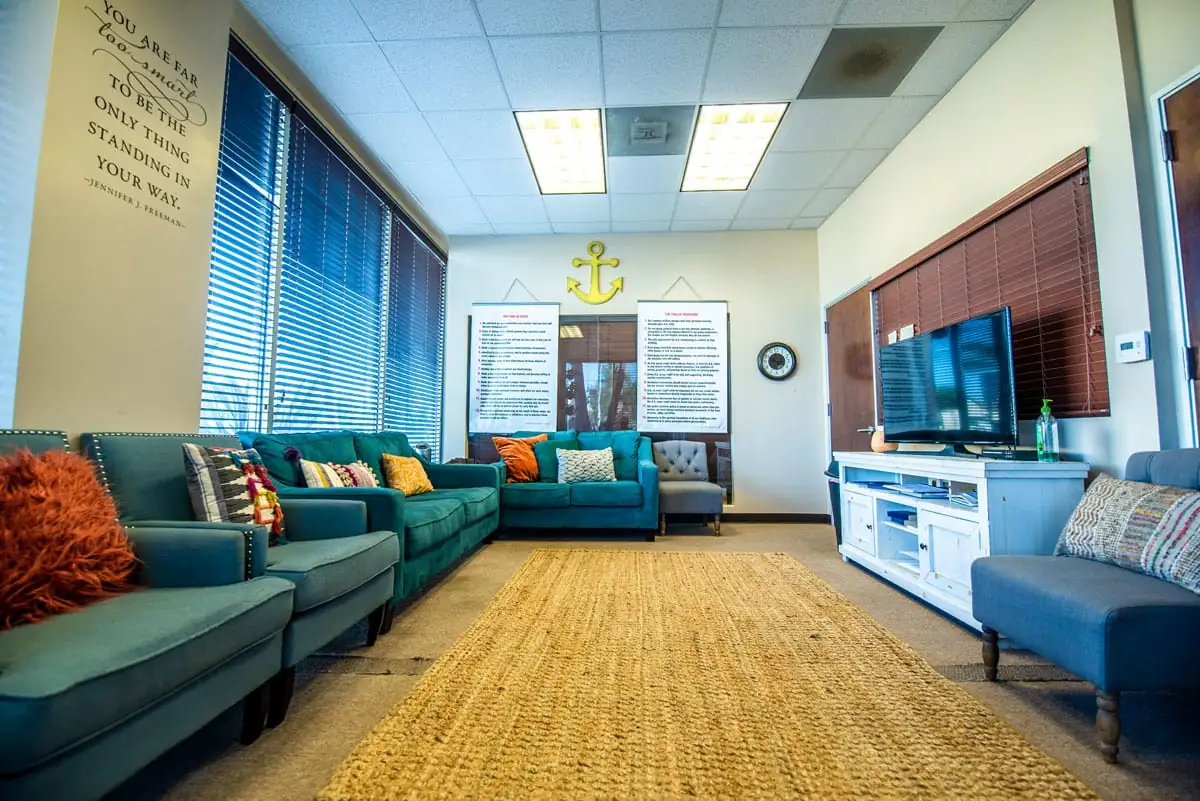
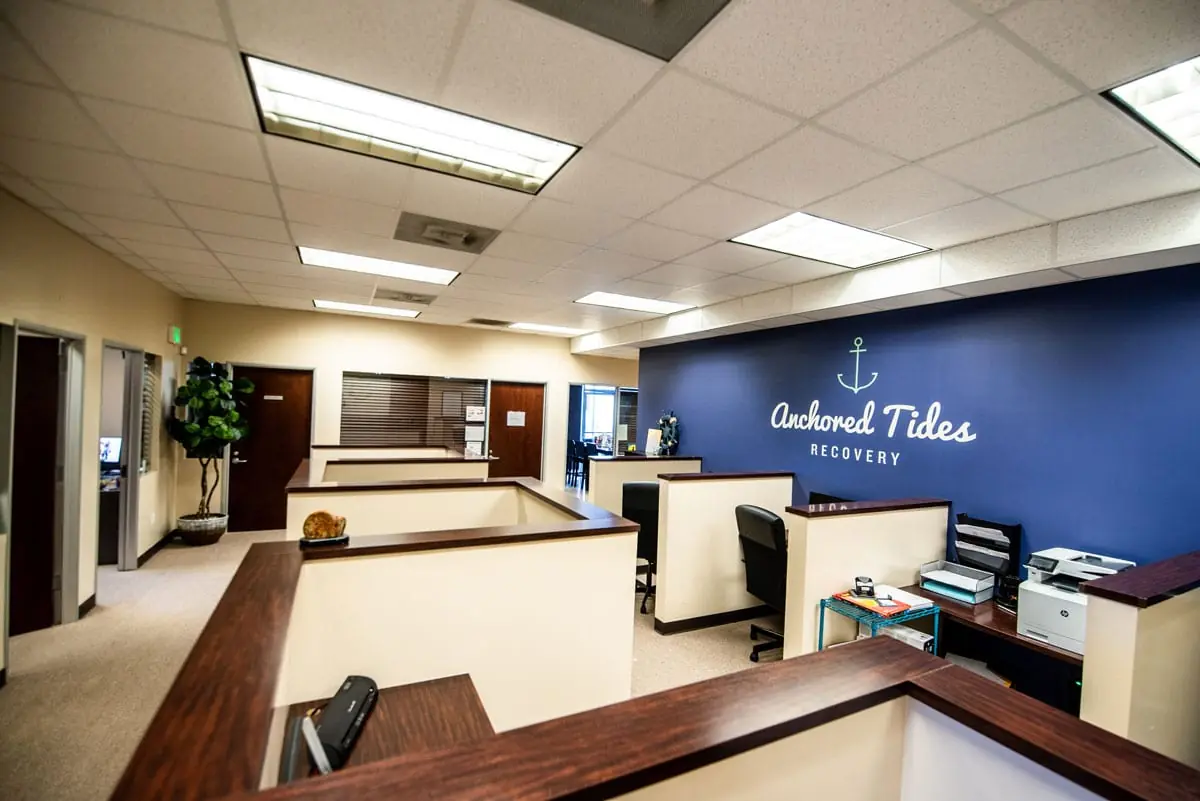
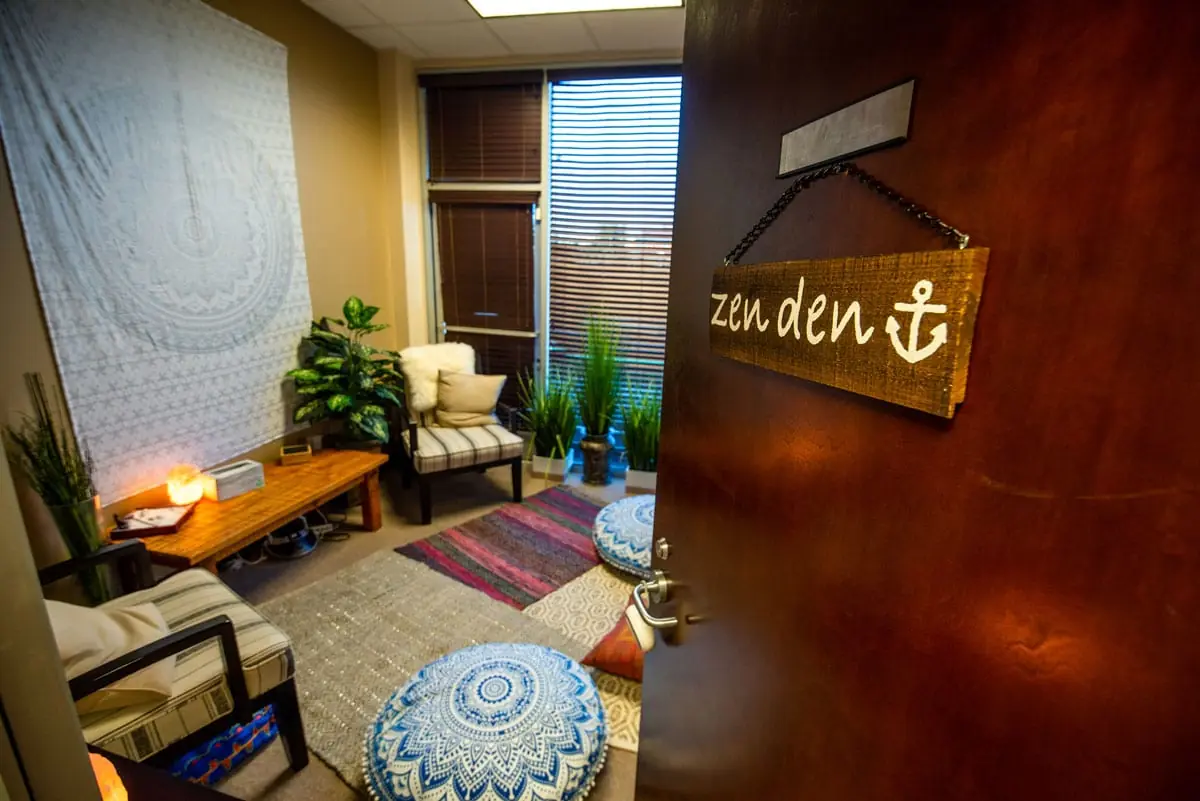
Group therapy room with comfortable seatingQuiet therapy room at Anchored Tides RecoveryQuiet therapy room entrance at Anchored Tides RecoveryAnchored Tides Recovery reception and office areaArt table with chalkboard wall — “I am enough”Anchored Tides Recovery workstations

Where the work happens

“Women-only rooms where the substance use and the mental health work happen as one conversation.”

Frequently Asked Questions

Frequently Asked Questions

  • Dual diagnosis means having a substance use disorder and a mental health condition at the same time — for example, alcohol use disorder alongside depression, or opioid use disorder alongside PTSD. Both conditions are treated together in one integrated plan rather than sequentially.

Evidence & accountability

Sources and clinical review

This page was reviewed by Zoe Tambling, LMFT on . The references below informed the specific topics noted with each citation.

  1. Substance Use Disorder Treatment for People With Co-Occurring Disorders (TIP 42)Substance Abuse and Mental Health Services Administration. Published January 1, 2020Supports: Integrated assessment and treatment for co-occurring substance use and mental-health conditions
  2. Treatment and RecoveryNational Institute on Drug Abuse. Published January 1, 2020Supports: Addiction treatment as an ongoing, individualized process
  3. Mental Health and Substance Abuse CoverageHealthCare.gov. Published January 1, 2024Supports: Behavioral-health coverage requirements and the need to confirm benefits with the individual plan