Outpatient · Women's Only · Orange County

Women's Outpatient Program in Huntington Beach, CA

Flexible weekly therapy and relapse prevention for women in longer-term stability — designed to sustain recovery without disrupting daily life.

  • Joint Commission Accredited
  • NAATP Member
  • DHCS License #300386AP
  • Female-Founded
A woman and her counselor in a focused one-on-one outpatient session
Anchored tides saved my life. I had been to an inpantient facility before and my sobriety wasn't lasting, until I found this place. I enjoyed the different groups and the staff and women are so welcoming. I felt so comfortable here, which I hadn't felt before. I now have the confidence to succeed in life. Very thankful for this place.
Brenna Boudreau
Read all reviews on Google

What to know about our Women's OP

  1. Our least-intensive level of caretypically one to two clinical sessions per week, focused on long-term relapse prevention and continued therapeutic support.

  2. Built for women in longer-term stabilitystep-downs from PHP or IOP, women in sustained recovery, and women whose clinical picture doesn't yet meet IOP criteria.

  3. Individual therapy at the corewith optional women's-only group, psychiatric medication management, and specialty modalities woven in as clinically indicated.

  4. Designed around real lifesessions are scheduled around work, school, and family — built to be sustainable over months and years, not weeks.

  5. In-network with most major commercial PPOswe verify each woman's benefits before her first session — no surprises about session limits, copays, or authorizations.

Why outpatient matters

The clinical hours do the heavy lifting — outpatient is where recovery becomes a life.

It's where a woman practices what she learned in higher levels of care inside her actual environment — her marriage, her parenting, her job, the holidays that used to be the hardest. Many of the women in our OP describe it as the place where they finally stop white-knuckling. The work moves from surviving the day to building a life.

See a typical week in OP
A women's-only group therapy circle, four women in conversation

Who Women's OP Is For

Women translating recovery — from a treatment setting into the texture of everyday life.

Outpatient supports women across a range of recovery stages. Most of the women in our OP fall into one of these categories:

  • Step-down clients who have completed PHP or IOP and want continued accountability as they rebuild a full schedule.
  • Long-term recovery clients maintaining sobriety who want sustained, lower-frequency clinical support to keep the work alive.
  • Women managing a stable mental health condition through periodic therapy and medication management.
  • Lower-acuity entry-point clients whose symptoms and history don't yet meet criteria for IOP but who need real clinical support.
  • Women re-entering treatment after a quieter season — often returning to a previous therapeutic relationship as life shifts.

When OP isn't the right fit

Outpatient is designed for stability, not stabilization.

  • Need medically supervised withdrawal? We'll refer to a trusted detox partner before outpatient work begins.
  • Need structured daytime care? Most women begin with PHP or IOP and step down to OP.

Our admissions team helps each woman find the right level of care — even if that level isn't with us.

Where OP fits in the continuum of care

The layer that holds the work together — once the higher-acuity phase is behind her.

Outpatient sits at the lowest-frequency end of clinical care. Use this to see where it lands compared with the levels above it.

ResidentialPHPIOPOPHours / week24 / 7~30+ hrs · 5 days~9–15 hrs · 3–5 days1–3 hrs · weeklyOvernight stayBest forStabilization, safety, or acute clinical needSignificant daytime support; sober evening environmentStable enough for work, school, or family alongside treatmentLong-term maintenance and step-down support
  • Residential
    Hours / week
    24 / 7
    Overnight stay
    Best for
    Stabilization, safety, or acute clinical need
  • PHP
    Hours / week
    ~30+ hrs · 5 days
    Overnight stay
    Best for
    Significant daytime support; sober evening environment
  • IOP
    Hours / week
    ~9–15 hrs · 3–5 days
    Overnight stay
    Best for
    Stable enough for work, school, or family alongside treatment
  • OPThis page
    Hours / week
    1–3 hrs · weekly
    Overnight stay
    Best for
    Long-term maintenance and step-down support
  1. Weekly

    Individual therapy

    One-to-one work with a licensed clinician — weekly or biweekly, on a cadence your treatment plan defines.

  2. Optional

    Women's-only group therapy

    Peer connection and accountability with other women in long-term recovery.

  3. As indicated

    Psychiatric medication management

    Coordinated with the rest of the clinical team so the picture stays unified.

  4. Ongoing

    Case management

    Touchpoints to keep recovery practical and grounded in real-life logistics.

  5. When clinically appropriate

    Specialty modalities

    EMDR, Surf Therapy, and other adjunctive work — woven in when the plan calls for it.

  6. Always

    A clinical relationship that holds

    The same team that knows you in OP knows you if life ever calls for a step up.

Looking for continued support after PHP or IOP?

Outpatient is how women sustain the work. Let's talk through — what your continuing care should look like.

Confidential. No obligation. Most major PPO plans accepted.

What we treat in outpatient

Long-term recovery — across substance use, mental health, and life transitions.

Our outpatient work is grounded in evidence-based modalities and shaped around the realities of women's recovery — relationships, caregiving, professional pressure, and the long arc of healing.

Insurance coverage for Women's OP

Outpatient behavioral health is one of the more commonly covered levels of care.

We are happy to verify your benefits prior to any commitment and let you know what your plan covers. Please note: we do not accept Medi-Cal or Medicaid.

In-Network

PPO, HMO, and EPO accepted

Major PPOs Accepted

Out-of-network

Not sure if you’re covered? Verify your insurance in 2 minutes

A woman in a yellow sweater in conversation with her therapist on a couch

Why women choose Anchored Tides for OP

Built for women. Run by women.

  • A women-only environment

    Every group, every shared space, every clinical conversation happens among women. It shapes what finally gets said out loud.

  • Trauma-informed by design

    Not a single workshop or modality — it's how we structure sessions, how clinicians are trained, and how we hold the room.

  • Female-founded and female-led

    Becca Edge (CEO/Co-Founder), Amy Dutton (Co-Founder), and Clinical Director Zoe Tambling, LMFT.

  • Continuity across levels of care

    Many women in our OP started with us in PHP or IOP. The clinical relationship carries forward, so OP feels like the next chapter — not a new program.

  • Specialty tracks that follow her

    Veterans and Military, Eating Disorder Treatment, and Dual Diagnosis tracks continue at a sustainable cadence into outpatient.

  • A coastal Huntington Beach setting

    Our Orange County home shapes the program in real ways — including Surf Therapy, available to outpatient clients when appropriate.

Our Huntington Beach location

Anchored Tides Recovery

19126 Magnolia St #101
Huntington Beach, CA 92646
(866) 329-6639

Service areas

Women across Orange County and the Southern California coast.

Most women travel in from Newport Beach, Costa Mesa, Huntington Beach, and the wider Southern California coast for outpatient care.

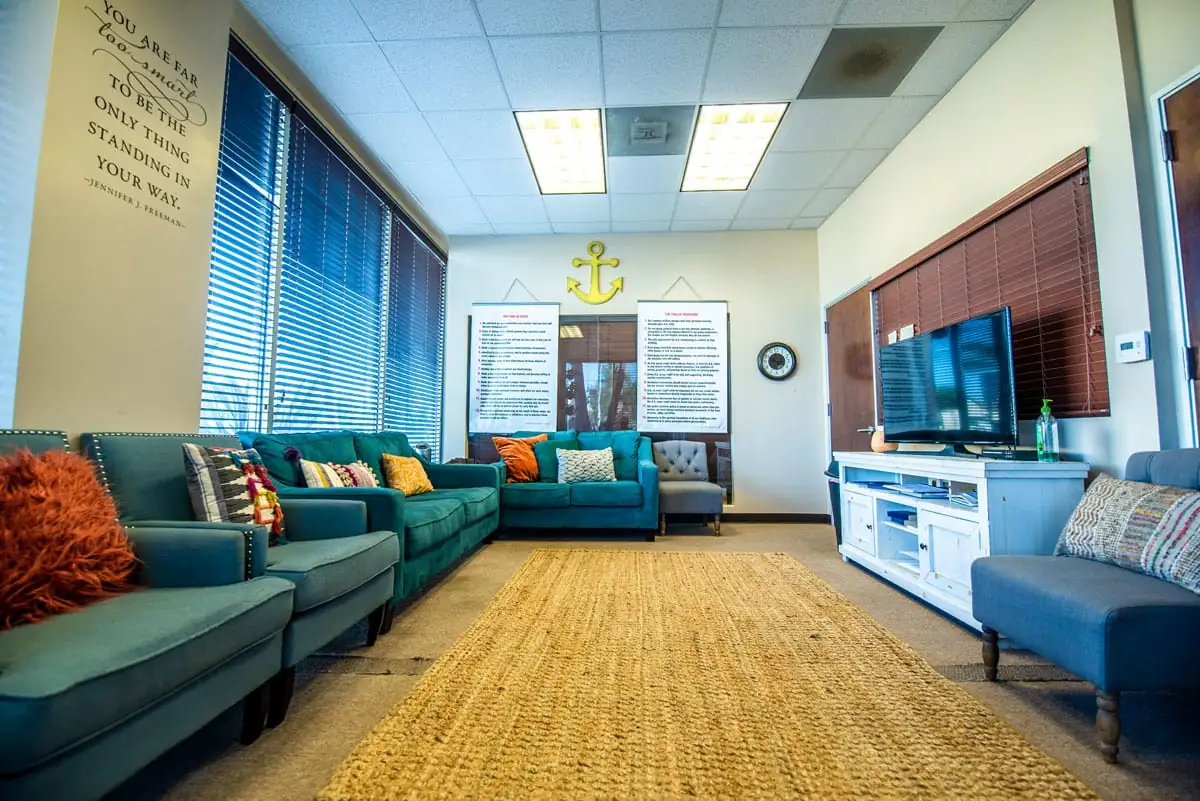
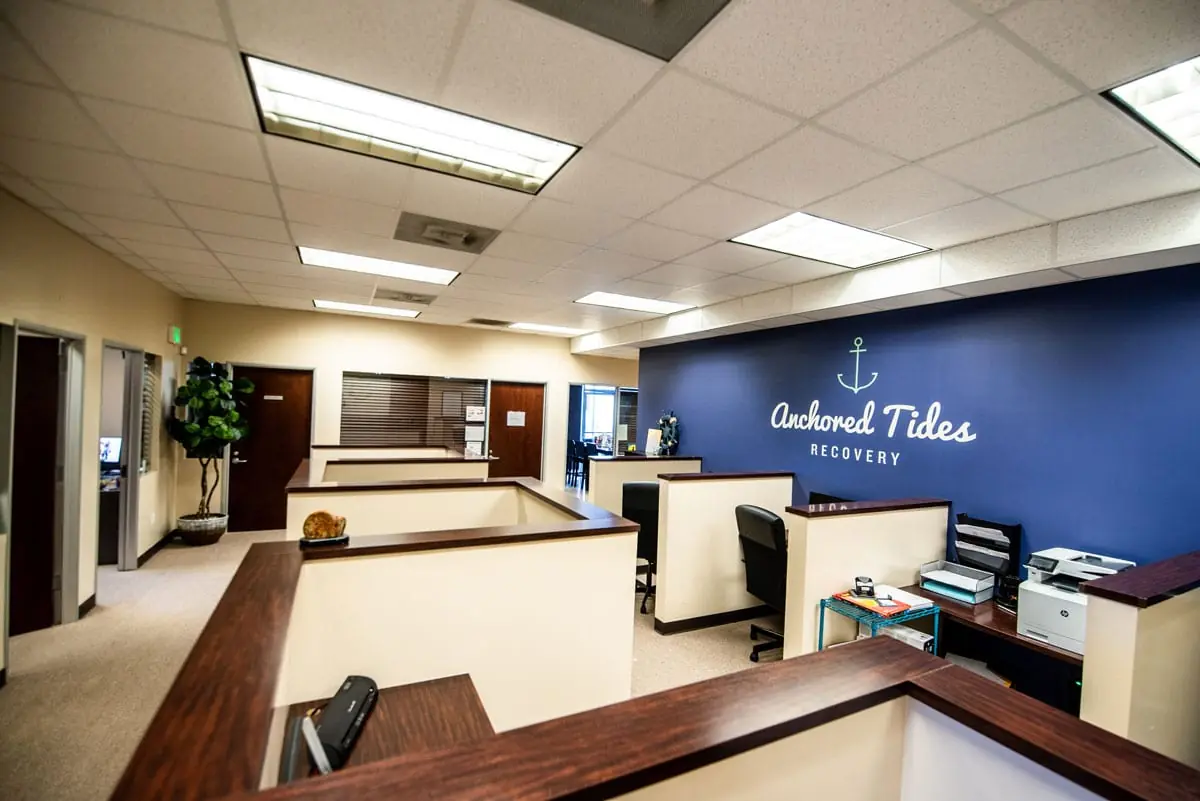
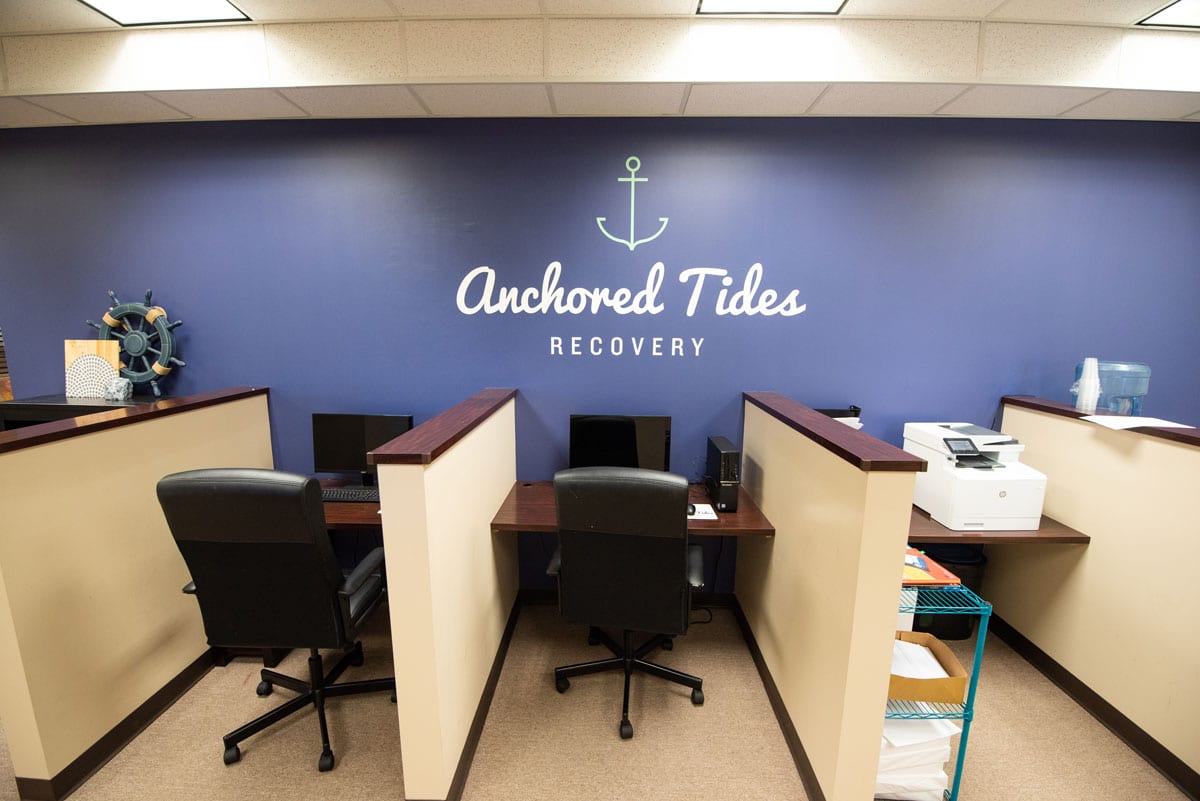
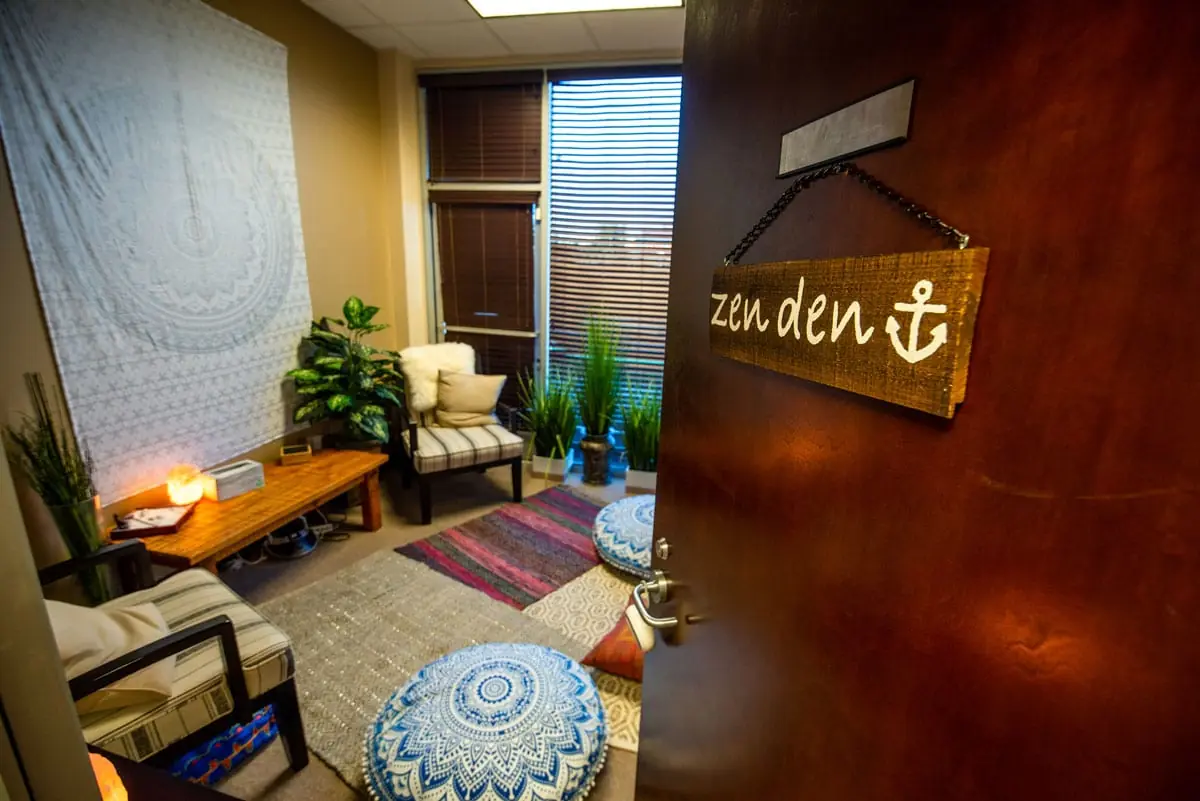
Group therapy room with comfortable seatingQuiet therapy room at Anchored Tides RecoveryQuiet therapy room entrance at Anchored Tides RecoveryAnchored Tides Recovery reception and office areaArt table with chalkboard wall — “I am enough”Anchored Tides Recovery workstations

Where the work continues

“The same rooms women came back to in PHP and IOP — now on a quieter cadence.”

Frequently Asked Questions

Frequently Asked Questions

  • Often, yes — though sometimes more, depending on the clinical plan and where a woman is in her recovery. Many women begin at once or twice weekly and adjust over time as their needs evolve. The structure is responsive, not fixed.

Evidence & accountability

Sources and clinical review

This page was reviewed by Zoe Tambling, LMFT on . The references below informed the specific topics noted with each citation.

  1. The ASAM CriteriaAmerican Society of Addiction Medicine. Published January 1, 2023Supports: Outpatient level-of-care placement and ongoing recovery planning
  2. Treatment and RecoveryNational Institute on Drug Abuse. Published January 1, 2020Supports: Addiction treatment, continuing care, and relapse-prevention support
  3. Mental Health and Substance Abuse CoverageHealthCare.gov. Published January 1, 2024Supports: Behavioral-health coverage requirements and the need to confirm benefits with the individual plan