
What Blue Xanax Bars Are — and Why Women Need to Know
Xanax (alprazolam) is one of the most prescribed and most addictive benzodiazepines. "Blue Xanax bars" refers to the 2mg bar-shape…
Read articleThe prescription drugs with the highest addiction potential fall into three main categories: opioids (oxycodone, hydrocodone, fentanyl), benzodiazepines (alprazolam, lorazepam, diazepam), and stimulants (Adderall, Vyvanse, Ritalin). Each carries different patterns of dependence and different risks for women specifically. Recognizing the warning signs — and asking for help early — changes everything.

Most women who develop dependence on prescription drugs never set out to. The pattern usually starts the way it's supposed to: a prescription for legitimate pain, anxiety, or attention difficulties. The medication works. Then it works less. Then the dose creeps up. Then the relationship with the medication becomes complicated in ways the original prescription didn't anticipate. Here's a clear-eyed look at the prescription drugs most often associated with dependence, what the warning signs look like, and how women specifically experience this pattern.
Opioids include oxycodone (OxyContin, Percocet), hydrocodone (Vicodin, Norco), morphine, codeine, fentanyl, tramadol, and methadone. They're prescribed for moderate to severe pain, and they're effective — which is part of the problem.
How dependence develops:
Women's risk: women are prescribed opioids more often than men, in part because women report chronic pain at higher rates. Combined with a faster progression to dependence (the "telescoping" effect), this leaves women more vulnerable to opioid use disorder than the prescribing patterns acknowledge.
Benzodiazepines ("benzos") include alprazolam (Xanax), lorazepam (Ativan), clonazepam (Klonopin), diazepam (Valium), and temazepam (Restoril). They're prescribed for anxiety, panic, insomnia, and certain seizure conditions.
How dependence develops:
Women's risk: women are prescribed benzos at roughly twice the rate of men, partly because anxiety is diagnosed more often in women. Long-term use is particularly common in women over 50, where the prescription is often originally given for a specific event (loss, surgery) and continues indefinitely.
Prescription stimulants include amphetamine (Adderall), lisdexamfetamine (Vyvanse), methylphenidate (Ritalin, Concerta), and dextroamphetamine (Dexedrine). They're prescribed for ADHD and, less commonly, narcolepsy.
How dependence develops:
Women's risk: stimulants are often misused for weight loss, given their appetite-suppressing effects. The combination of cultural pressure around weight, the productivity demands many women face, and the relative ease of access through ADHD prescriptions makes this category particularly relevant for women.

Prescription drug dependence carries some specifics that distinguish it from other substance use disorders. Many women come in still under active prescription. Many feel particular shame because the substance was "legitimate." Many have complex pain or anxiety conditions that need ongoing management.
If you've been wondering whether your prescription has become something more than a treatment, you don't have to figure that out alone.
Call (866) 329-6639 or Verify Your Insurance — confidential, no obligation.
Possibly, yes. Physical dependence can develop from any consistent use of opioids, benzos, or stimulants — prescription or not. Addiction (the broader pattern of compulsive use, loss of control, continued use despite consequences) is separate from physical dependence but can develop alongside it. Having a legitimate prescription doesn't protect against either.
The data consistently shows three categories at the top: opioids (especially oxycodone and hydrocodone), benzodiazepines (especially alprazolam and lorazepam), and stimulants (especially amphetamine and methylphenidate). Women are prescribed all three at higher rates than men, and dependence patterns tend to develop faster. Sleep medications and certain weight-loss medications round out the list.
With benzodiazepines and opioids specifically, no — abrupt cessation can be medically dangerous. Benzodiazepine withdrawal can include seizures. Opioid withdrawal is rarely life-threatening but can be severe enough to drive return-to-use. Talk to a clinician about a supervised taper or detox plan. Stimulant withdrawal is medically safer but psychologically difficult and often needs support.
Honest questions: Am I taking more than prescribed, or more than I want to? Do I feel anxious when supply runs low? Have I hidden the use from anyone? Am I using for reasons other than the original condition? Are people in my life concerned? Three or more yes answers is reason to talk to a clinician.
Not necessarily. Many women in recovery from prescription dependence work with their treatment team on alternatives — non-addictive medications for the underlying condition, therapy-based approaches to anxiety or pain, integrated care. Whether full cessation is required depends on the medication, the original condition, and your specific situation.
Evidence & accountability
This page was reviewed by Zoe Tambling, LMFT on . The references below informed the specific topics noted with each citation.
Ready to take the next step?
Call (866) 329-6639 or verify your insurance — confidential, no obligation. Women-only environment, Joint Commission accredited.
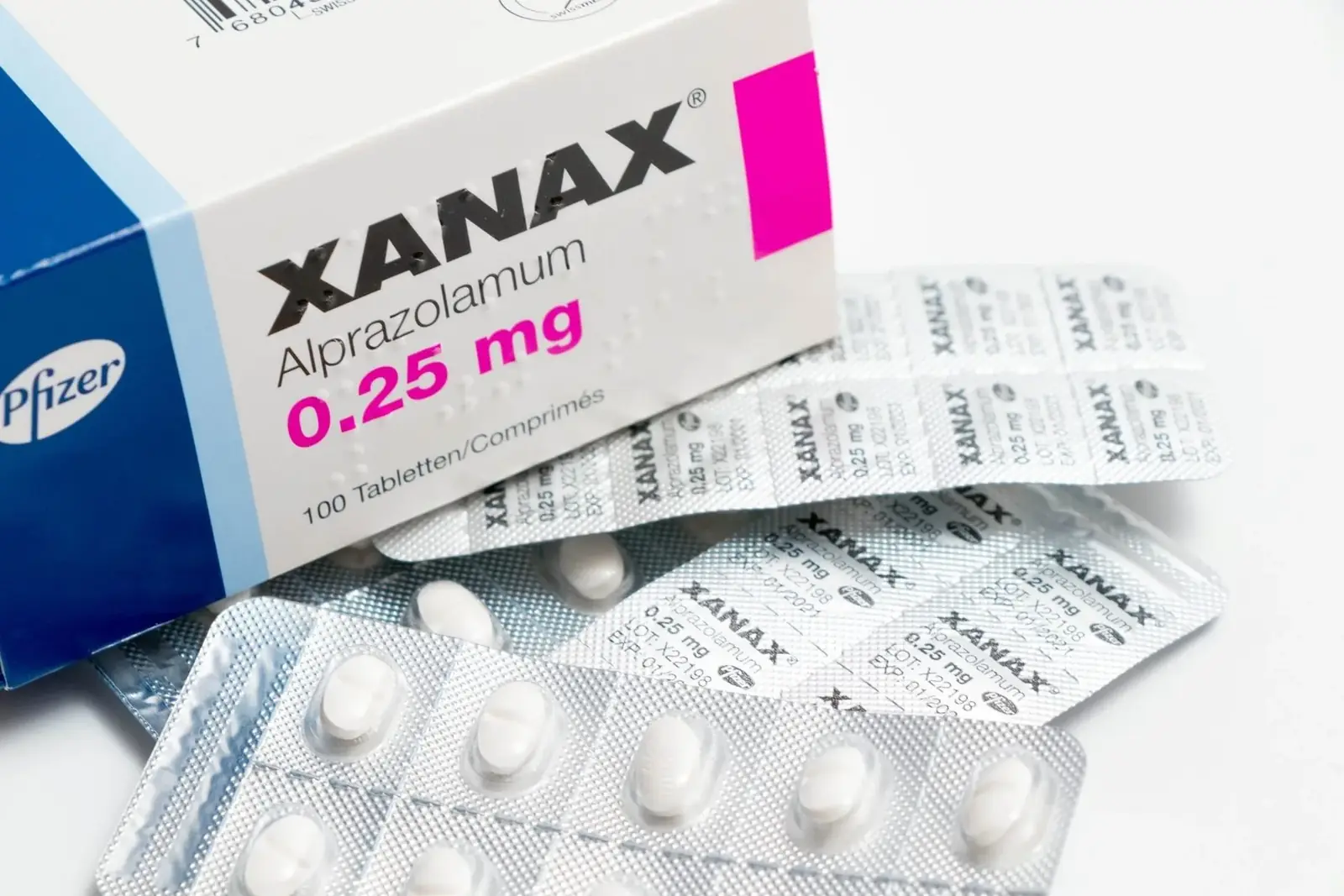
Xanax (alprazolam) is one of the most prescribed and most addictive benzodiazepines. "Blue Xanax bars" refers to the 2mg bar-shape…
Read article
Addiction during pregnancy is a sensitive and often shame-laden experience — and one where getting support quickly matters most. O…
Read article
Medication-Assisted Treatment (MAT) — methadone, buprenorphine (Suboxone, Subutex), or naltrexone — is one of the most evidence-ba…
Read article