
What Life Beyond Addiction Actually Looks Like
Life beyond addiction isn't just the absence of substances — it's the active building of a life where substances are no longer nee…
Read articleDrug addiction can feel like it's taken everything — your career, your relationships, your sense of self. It hasn't. Addiction is a chronic brain disease, not a moral failing, and the women who feel like their lives are over are usually closer to the beginning of recovery than they realize. With trauma-informed, women-only support, the cycle of shame can break.
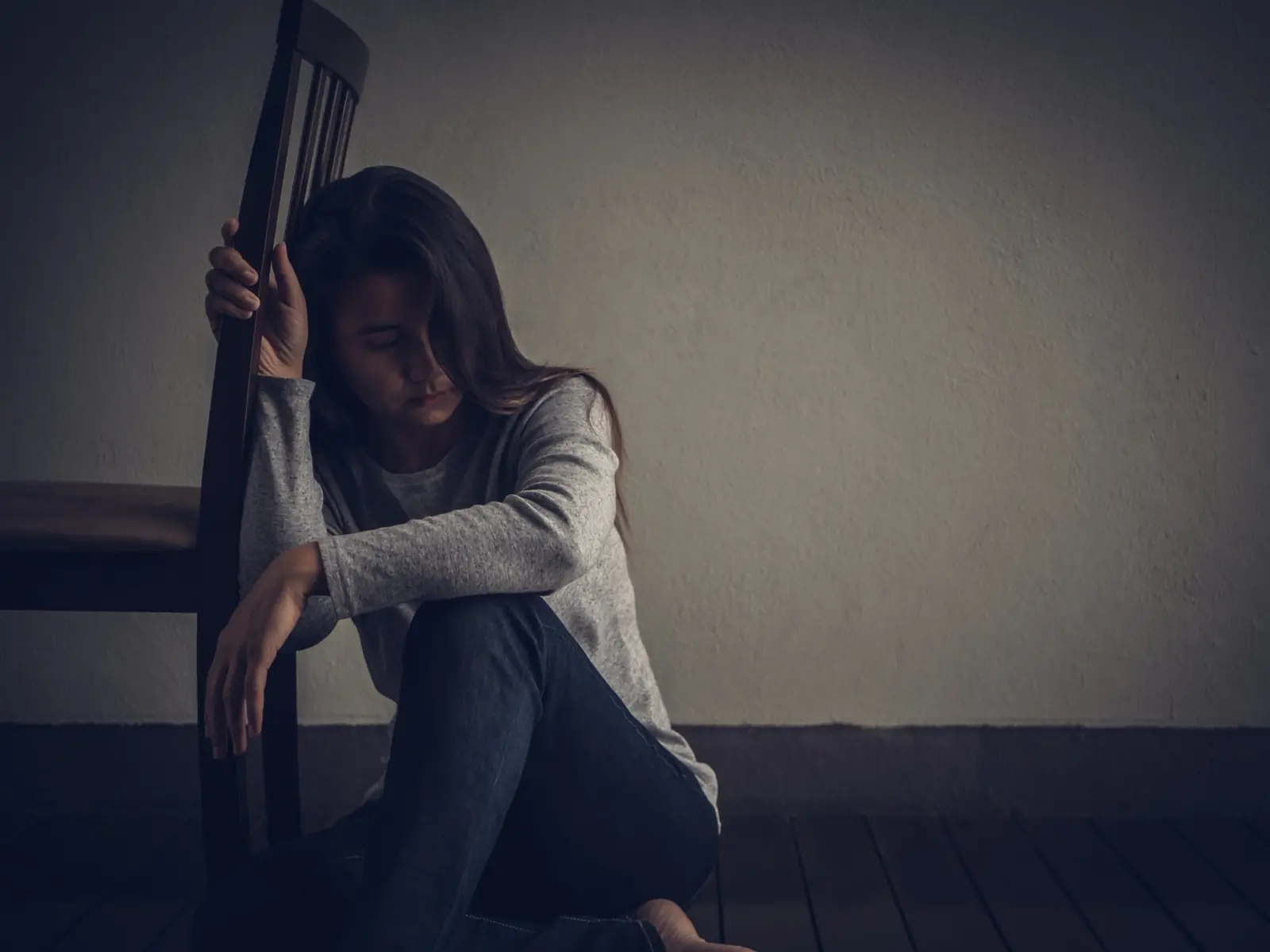
We hear it from women all the time: "It ruined my life." The career they were proud of. The relationships they tended for years. The version of themselves they recognized in the mirror. From inside addiction, it can feel like there's nothing left. But the women you'll meet in long-term recovery — the ones running businesses, raising kids, doing meaningful work — almost all describe a moment when they thought everything was over. It wasn't. Here's how the disease actually works, what the road back tends to look like, and what genuine support sounds like.
Addiction is a chronic brain disease. It's not a character flaw, a sign of weak willpower, or evidence that you're a bad person. The National Institute on Drug Abuse classifies substance use disorder as a chronic, treatable disease that changes how the brain processes reward, motivation, and self-control. Knowing this matters — because addiction feeds on shame, and shame is the fuel that keeps the cycle running.
If you take nothing else from this article, take this: you are not broken. Your brain is responding the way addiction-shaped brains respond. There is a way out, and you don't have to white-knuckle it alone.
Addiction reshapes the parts of your brain that handle motivation, memory, and reward.
Understanding this biology isn't an excuse. It's an explanation. And it's the foundation for treatment that actually works.
The hardest part for most women isn't the substance — it's what it does to the people around them. Partners feel shut out. Kids watch a parent disappear in plain sight. Parents and friends try every approach: confrontation, ultimatums, silence. None of it usually works, because addiction isn't a behavior choice the person can simply make differently.
If you're the one struggling, the guilt about your family is often a bigger driver of continued use than the substance itself. The shame becomes its own loop.
Job performance drops. Money disappears in ways that don't add up. Sleep, appetite, and energy go sideways. Health conditions get ignored. Eventually, things break — sometimes loudly, sometimes quietly.
Many women describe addiction as losing themselves. The hobbies you used to enjoy, the values you used to live by, the version of you your friends used to recognize — addiction crowds all of it out. Recovery is, in large part, getting that self back.

Research over the past two decades has made one thing clear: addiction in women is not just addiction in a different body. The drivers, the timeline, and what recovery requires all look different.
These differences are exactly why women-only treatment matters. A room full of women who get it — including the parts you've never said out loud — changes what's possible in treatment.
Not the dramatic rock-bottom of TV scripts. Usually quieter. A morning you couldn't look at yourself. A moment you scared a child. A realization that something in the rear view was a near-miss. Recognition is hard because it costs the comfort of pretending. But it's the door.
If you're reading this, you're closer to that call than you think. A confidential conversation with a treatment team — no commitment, no pressure — is how most journeys start. We talk through what's going on, what your day-to-day looks like, what your insurance covers, and what the right level of care might be.
If you've been using daily or in large amounts, your body may need medically supervised detox before therapy begins. Anchored Tides doesn't provide detox on-site — we refer to trusted partner facilities for that first stage, then bring you into our outpatient programming once you're medically stable. We coordinate the handoff so it isn't on you to figure out.
Anchored Tides offers three outpatient levels:
Your level of care isn't a label you're stuck with. We adjust as you progress.
Substance use isn't usually the root problem — it's the strategy a person developed for an underlying one. We use EMDR to process trauma, DBT to build emotional regulation skills, and CBT to interrupt the thinking patterns that drive use. For most women, this is where the real shift happens.
Recovery is a long arc. The first year is often about not using and learning who you are without substances. The second is about rebuilding — relationships, finances, identity, purpose. The years after that are about a life that's worth protecting.
Anchored Tides Recovery is a women's-only outpatient program in Huntington Beach, California, founded by women, led by women, designed around how women actually heal.
If you've been reading this thinking "some of this sounds like me," you don't have to be sure. You don't have to have a plan. You just have to be willing to talk to someone who isn't going to lecture you.
Call (866) 329-6639 or Verify Your Insurance — confidential, no obligation. Women-only environment, founded and led by women, JCAHO accredited, DHCS licensed.
No. Addiction is classified as a chronic brain disease by the National Institute on Drug Abuse, SAMHSA, and the American Medical Association. It's not a character flaw, a willpower problem, or evidence that someone is a "bad" person. Treating addiction as a moral failing is one of the biggest barriers to women seeking help — and one of the worst frames for actually getting better. You don't shame someone out of diabetes. You don't shame someone out of addiction either.
Partly. Family history is one of the strongest predictors of substance use disorder, but genetics explain roughly 40–60% of risk — not 100%. The rest is environment: trauma exposure, age of first use, mental health conditions, social context. Having addiction in your family doesn't doom you to it. It just means the risk is real and worth respecting. If you have a family history and are wondering whether your own use has crossed a line, that's a conversation worth having with a clinician.
Start with three things. First, learn about addiction as a disease — it changes how you see her and what you say. Second, lead with empathy, not ultimatums; most mothers underestimate how much shame is already in the room. Third, point her toward gender-specific treatment if you can — addiction in women has different drivers and different recovery needs than addiction in men. Don't wait for rock bottom. The longer untreated addiction runs, the more it takes. If you'd like to talk about whether our program might be a fit for your daughter, you can call us — even just to ask questions.
Yes — and it's more common than most families realize. Drug addiction in older women is often connected to long-term use of prescribed medications (pain medications, benzodiazepines for anxiety or sleep, sometimes stimulants), and it can be missed for years because the woman is functioning, prescribed, and not fitting the cultural picture of "an addict." Older women face unique challenges: longer use histories, more medical complications, and often deeper isolation. They also recover well in the right setting. Age is not a barrier to healing.
Physical dependence is the body's adaptation to a substance — withdrawal symptoms when you stop. Addiction is broader: compulsive use despite consequences, loss of control, the substance taking priority over things that matter. You can be physically dependent on a medication (some blood pressure drugs cause withdrawal when stopped abruptly) without being addicted to it. And someone can be addicted to behaviors with no chemical dependence. They overlap often, but they aren't the same thing.
Evidence & accountability
This page was reviewed by Zoe Tambling, LMFT on . The references below informed the specific topics noted with each citation.

Life beyond addiction isn't just the absence of substances — it's the active building of a life where substances are no longer nee…
Read article
Since California legalized cannabis in 2016, the cannabis industry has commercialized rapidly — growing stronger, more potent prod…
Read article
FMLA gives eligible employees up to 12 workweeks of unpaid, job-protected leave in a 12-month period, and treatment for a substanc…
Read article