
How to Actually Quit Drinking — Safely, Kindly, and With Support
Quitting alcohol safely depends on how much and how long you've been drinking. Light drinkers can usually stop on their own; daily…
Read articleAlcohol is one of the least effective long-term relaxation tools — it disrupts sleep, increases anxiety the next day, and trains the nervous system to depend on it. Better alternatives include nervous-system regulation techniques (breathwork, cold exposure, movement), structural changes (pre-stress, not post-stress, decompression), connection-based relaxation (calls, conversations, time with safe people), and addressing what's actually generating the need for relaxation in the first place. Some of these alternatives work better than alcohol ever did.

If you've been told (and bought) the idea that wine at the end of the day = relaxation, you're in the company of millions of women who learned the same script. The script is wrong, or at least incomplete. Alcohol provides short-term sedation that the nervous system pays for in disrupted sleep, rebound anxiety, and dependency. Other things work better. This guide is for women in sobriety, women in sober-curious experiments, and anyone tired of the wine-equals-self-care narrative.
The cumulative effect: women who use alcohol regularly to relax often have higher baseline anxiety than they did before they started, which is part of why cutting it out — even temporarily — produces unexpected calm after the initial adjustment.
Specific breathing patterns directly activate the parasympathetic (rest-and-digest) nervous system. Effective protocols:
Cold water on the face — particularly the area around the eyes — activates the mammalian dive reflex, dropping heart rate and producing rapid calm. Splashing cold water, pressing an ice pack to the face, or a brief cold shower all work.
Different from "exercise." Gentle movement — a walk outside, slow stretching, yoga, dancing alone in your kitchen — regulates the nervous system in ways that intense workouts don't. The walk-after-dinner habit some cultures keep is one of the most underrated relaxation tools.
EMDR's underlying principle: alternating left-right input calms the nervous system. Walking is naturally bilateral. So is alternating tapping (one knee then the other), looking back and forth slowly, or listening to bilateral audio tracks.
Many women reach for alcohol because they've absorbed an overwhelming day with no decompression buffer. Restructuring the day so stress doesn't accumulate is more effective than handling the accumulated stress at the end:
Some of the most effective relaxation isn't solo. Social connection — with people who feel safe — directly regulates the nervous system through what neuroscientists call co-regulation.
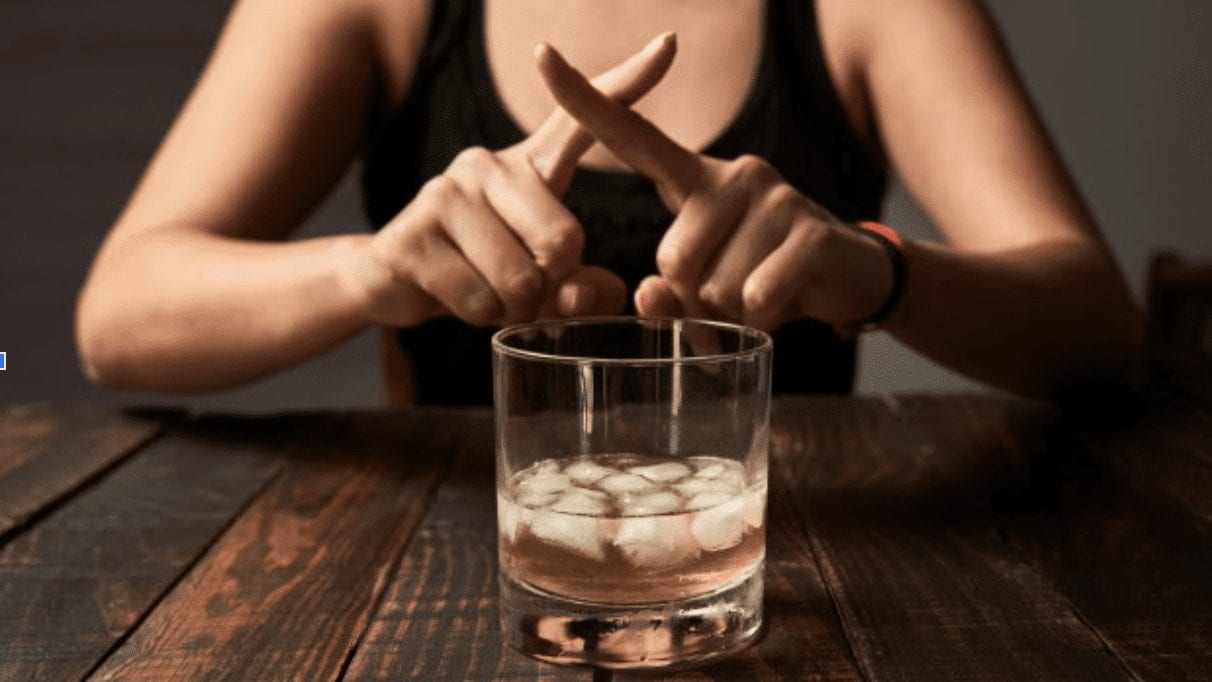
Much of what felt like "needing a drink" is actually the ritual: the timing, the glass, the specific moment. Replacing the ritual matters as much as replacing the substance.
Often the chronic reach for relaxation is information about something underneath:
If alcohol was solving a problem, that problem needs to be solved in a different way once alcohol is out. Therapy, sometimes medication, sometimes lifestyle restructuring.
If the chronic reach for alcohol-relaxation has been a signal of something larger you've been managing, you don't have to figure that out alone. Our team can help you sort out what's underneath.
Call (866) 329-6639 or Verify Your Insurance — confidential, no obligation.
Two reasons: first, the nervous system became dependent on alcohol as the relaxation tool, so other pathways haven't been used in a while; second, the underlying conditions (anxiety, depression, trauma, burnout) that drove the drinking are now uncovered. Both are addressable — the first through practice, the second through clinical treatment.
Varies. Most women report that their baseline ability to relax improves noticeably within 2-3 months of sobriety, with continued improvement over the first year. The body's natural relaxation pathways begin to rebuild as soon as alcohol exits the picture. The first few weeks are usually the hardest.
For some women yes, for others no. NA products that closely mimic the real thing can trigger cravings or undermine the psychological work of moving past the substance. NA products that are clearly different (kombucha, sparkling water, herbal cocktails) are usually safer. Your honest read on yourself is what matters.
Either you haven't done them consistently long enough (most need weeks of regular practice to produce effects), or there's an underlying condition that needs clinical attention. Persistent inability to relax despite consistent practice is itself information — often pointing to anxiety, trauma, or burnout that warrants therapy.
Generally not as a relaxation strategy. Cross-addiction (replacing one substance with another) is one of the more common pitfalls in early recovery. Cannabis specifically can develop into its own use disorder, and the appearance of being a "safer" alternative often hides escalating use. If you're considering this seriously, talk to a clinician.
Evidence & accountability
This page was reviewed by Zoe Tambling, LMFT on . The references below informed the specific topics noted with each citation.
Quitting alcohol safely depends on how much and how long you've been drinking. Light drinkers can usually stop on their own; daily…
Read article
If you're asking the question, that itself is information. Alcohol use disorder isn't an all-or-nothing label — it exists on a spe…
Read articleAlcohol cravings are normal in recovery and they pass — typically within 15-30 minutes if not acted on. The most evidence-based st…
Read article