
How Social Media Hooks the Same Brain Systems As Drugs
Social media engages the same brain reward systems as substances — variable-reward dopamine release, learned compulsive patterns,…
Read articleSocial media isn't a drug, but compulsive use can mimic one — triggering craving, tolerance-like escalation, and withdrawal-like irritability through the brain's reward system. There's no formal "social media addiction" diagnosis; what matters is whether use is harming your sleep, mood, or relationships. When it's tangled up with anxiety, depression, or trauma, support helps.
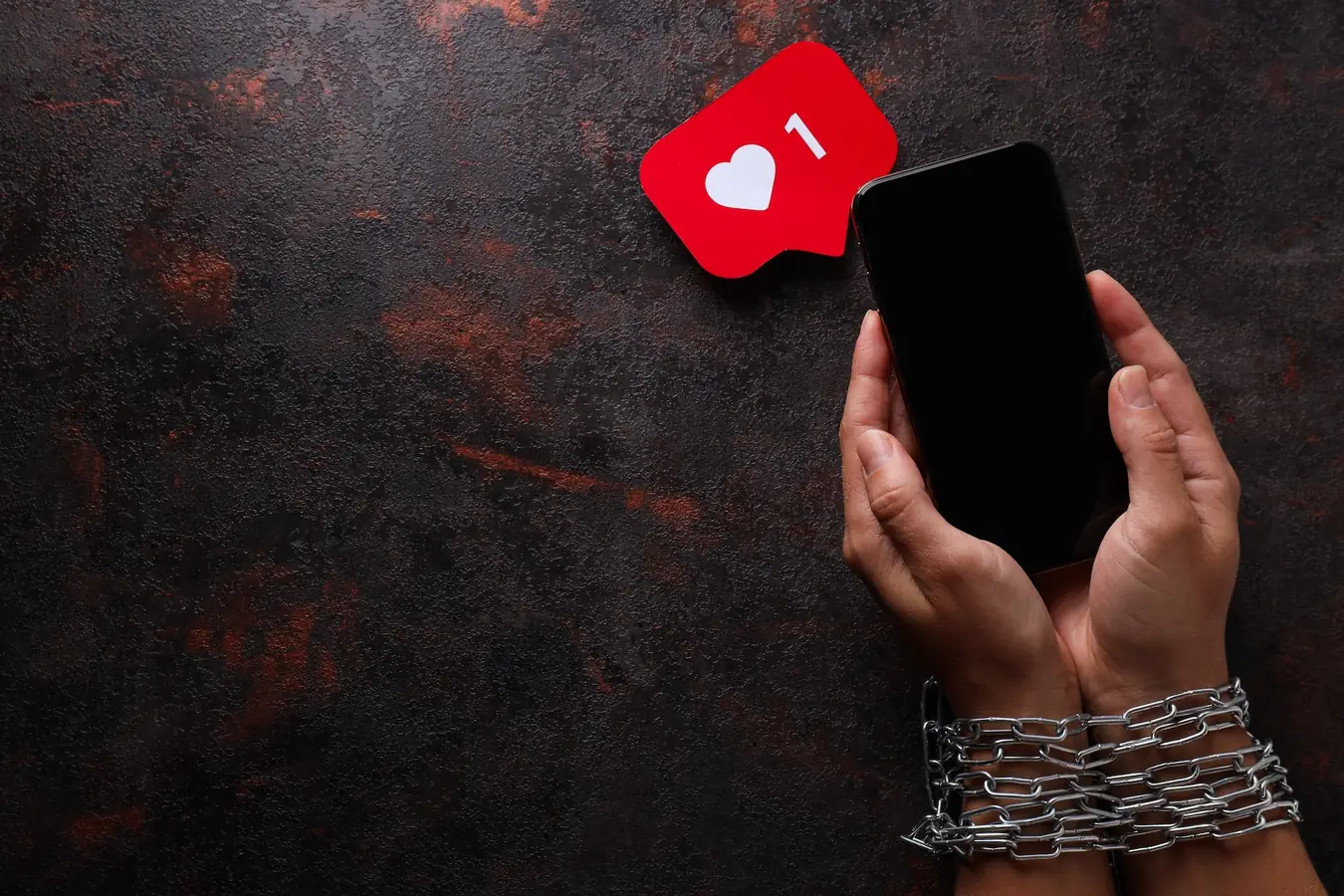
No — social media is not a drug. It isn't a chemical substance, and there's no official diagnosis of "social media addiction." Used compulsively, though, it can produce the same loops a drug can: reward, craving, and a restless, irritable pull when you try to stop. For many women, scrolling quietly becomes a way to manage stress, loneliness, or trauma — which is often where it overlaps with co-occurring mental health and substance use we treat through dual-diagnosis care.
Not a substance, but drug-like: social media doesn't contain a chemical, yet variable rewards can drive craving and withdrawal-like patterns.
No official diagnosis: "social media addiction" isn't in the DSM-5; clinicians describe it as problematic or compulsive use, or a behavioral addiction.
A real risk marker: federal advisory data links 3+ hours a day with roughly double the risk of depression and anxiety symptoms in adolescents — a signal, not a verdict.
It lands harder on women: comparison pressure, body-image messaging, and trauma reminders can intensify the loop; many girls and women report feeling "addicted."
Boundaries help — and so does support: protecting sleep, quieting cues, and curating feeds reduce the pull; when anxiety, depression, or substance use sit underneath, dual-diagnosis care addresses the root.
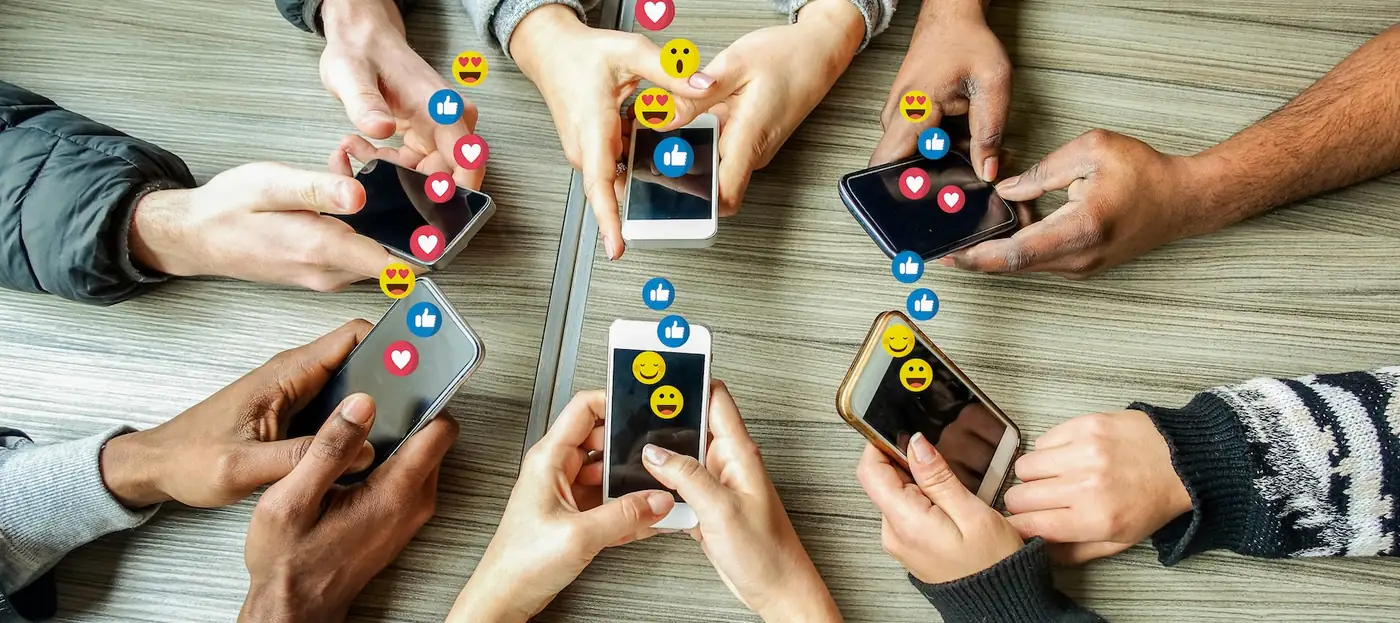
Compulsive use takes hold when variable rewards — an unexpected like, a novel post, a flash of outrage — repeatedly fire the brain's reward circuitry. Unpredictable payoffs train the habit more powerfully than predictable ones, so the urge to "just check" can outrun your intentions, especially on hard days. Over time, the same loop can produce three patterns that resemble substance use: craving, a strong pull toward the phone; tolerance-like escalation, needing more time or stimulation for the same relief; and withdrawal-like irritability, anxiety, or restlessness when you step away. For many women, the habit becomes braided into emotional regulation — a quick way to soothe stress or quiet discomfort — which is part of why it's so hard to loosen.
A behavioral addiction is when an activity becomes so emotionally or psychologically reinforcing that it begins to disrupt daily life — even without a chemical substance involved. Behavioral addictions engage the same reward circuits as substance use disorders, which helps explain how an everyday behavior can start to feel unmanageable. The core signs are consistent:
Clinically, no. There's no DSM-5 diagnosis called "social media addiction." Researchers and clinicians instead use terms like problematic social media use, compulsive use, or behavioral addiction to describe patterns that cause real distress and impairment. The DSM-5 does list Internet Gaming Disorder as a "condition for further study," and that framework is often applied to social platforms — which is why the language can feel inconsistent depending on where you read it. What actually guides whether support helps isn't the label — it's the impact:
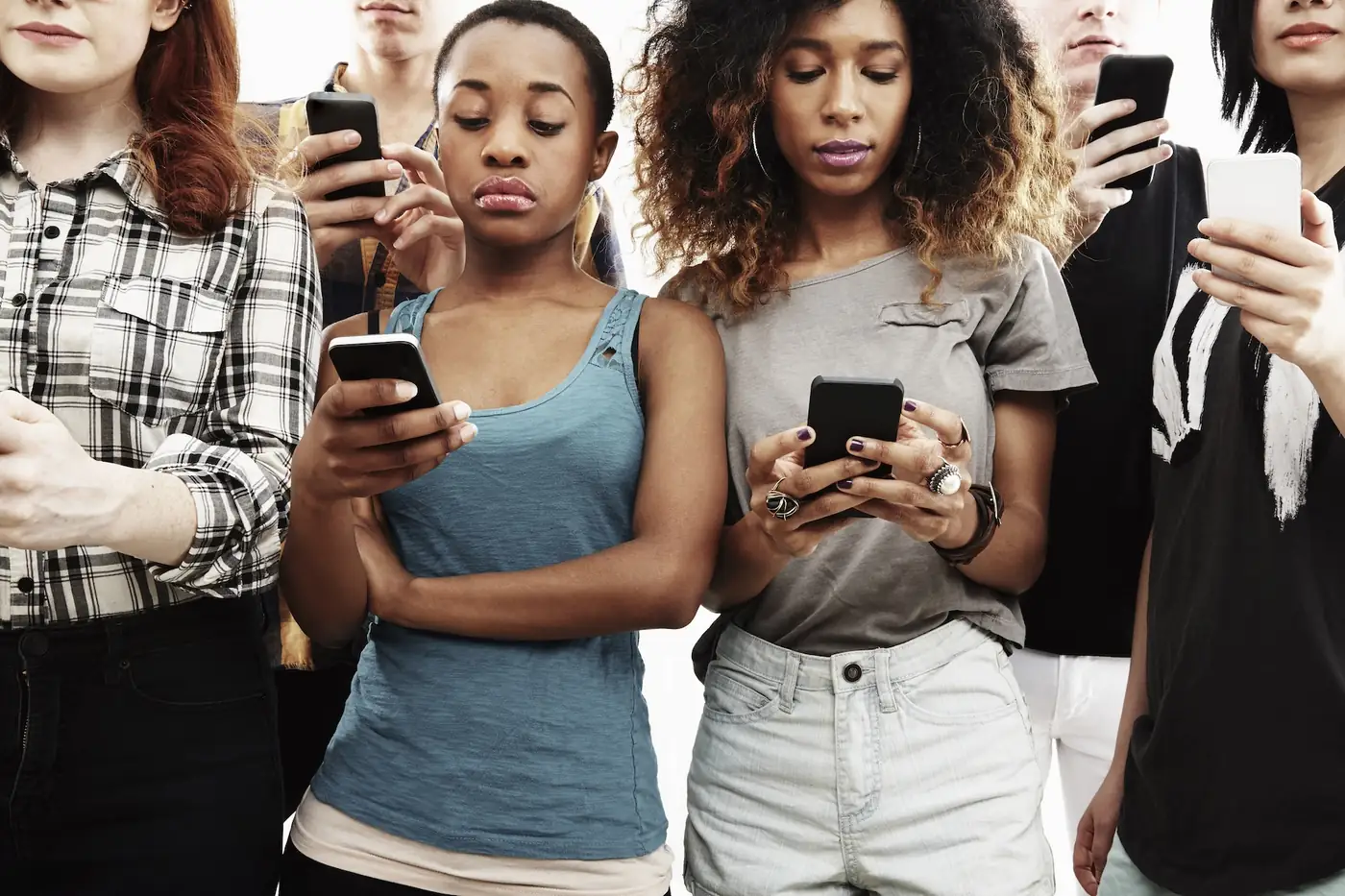
Women often carry a particular weight online — comparison pressure, body-image messaging, relational stress, and trauma reminders that can sharpen existing vulnerabilities. Federal survey data underscores how personal this can feel: roughly a third of girls aged 11 to 15 said they feel "addicted" to certain platforms, and more than half of teens said it would be hard to give up social media.
| Metric | Figure | Population | Note |
|---|---|---|---|
| Use any social media | ~95% | Teens 13–17 | Near-universal access |
| Use "almost constantly" | >1 in 3 | Teens 13–17 | Heavy-use subgroup |
| 3+ hours a day | ~2× risk | Teens 13–17 | Depression/anxiety symptoms; association, not proof of cause |
| Feel "addicted" to a platform | ~1 in 3+ | Girls 11–15 | Self-reported |
| Say it would be hard to give up | >50% | Teens | Self-reported |
Source: U.S. Surgeon General's Advisory on Social Media and Youth Mental Health. Figures describe adolescents; reward mechanisms apply more broadly, but adult-specific data is more limited.
Sometimes the clearest signal isn't how long you scroll, but what you're reaching for it to do. Women often use social platforms to manage feelings such as stress, anxiety, loneliness, emotional numbness, or trauma-related triggers.
Notice two or more of these for about two weeks or longer: you lose an hour or more most nights to unplanned scrolling and feel groggy the next day; you try to cut back but slip into old patterns within a day or two; your mood lifts on a full day away and dips again after use; you hide or downplay your screen time with people you love. If several ring true, our women-only Intensive Outpatient Program (IOP) offers skills-based support alongside care for the anxiety, depression, or trauma that can drive the cycle.
Social media itself isn't the "drug." More often, it reveals or amplifies what a woman has been carrying quietly — anxiety, depression, trauma or PTSD, relationship wounds, emotional dysregulation, perfectionism, early addiction tendencies, or loneliness masked by online connection. Stress and emotional dysregulation increase vulnerability to compulsive behaviors, which is why hard days make the pull stronger — and why building regulation skills matters. When scrolling becomes the main way to soothe fear, sadness, or numbness, it can point to treatable conditions. Dual-diagnosis care addresses both the behavior and the drivers underneath, with a women-centered clinical team who understand how these patterns show up in women's lives.
For women in recovery, digital habits and substance use often feed each other. Social media can become a trigger for comparison that leads to shame, then to craving; a source of loneliness that leads to coping through substances; a place where old social circles trigger relapse risk; or a numbing mechanism that replaces healthier coping skills. Cross-cueing matters: old party photos, bar promotions, or substance-related posts can stir craving and wear down resolve.
If substance urges resurface alongside heavy scrolling, women-centered Partial Hospitalization (PHP) or IOP can help re-stabilize sleep, mood, and coping before a lapse gathers momentum.
An all-or-nothing ban rarely lasts. A compassionate, one-week reset teaches you more — what actually helps, and what's worth keeping.
If you keep snapping back to old patterns, structure and support can help the boundaries hold — especially when anxiety, depression, trauma, or substance urges are part of the picture.
The conversation about heavy social media use has shifted — from personal willpower toward product design and public health. In 2023, the U.S. Surgeon General issued an advisory on social media and youth mental health, and in 2024 called for a warning label on platforms. Since then, several states have moved on warning-label and "addictive feed" laws, many of which face active court challenges. Most of these measures focus on minors, so the specifics may not apply to you as an adult. The reframe still matters. Features like infinite scroll, autoplay, and unpredictable notifications are designed to be hard to put down. If stepping away feels harder than it "should," that's consistent with how persuasive design works — not a personal failing. The practical move stays the same: protect your sleep, tame the cues, replace the habit with something restorative, and reach for support when the underlying patterns need more than a reset.
You don't need an official "social media addiction" label to deserve care. In our women-only PHP and IOP, clinicians blend evidence-based skills with trauma-informed support to address the patterns beneath compulsive use.
Care plans are shaped around your real life, so change can hold outside the clinic. Call us anytime at (866) 329-6639 to speak with a women-centered team member, or verify your insurance — confidential, no pressure.
No. There's no DSM-5 diagnosis for "social media addiction." Clinicians use terms like problematic or compulsive social media use, and often borrow the Internet Gaming Disorder framework. Help is based on how much it's affecting your life — not on a label.
There's no universal cutoff, but federal advisory data flags 3+ hours a day as a point where mental-health risk rises for teens. For adults, a better gauge is impact: how you feel afterward, and whether it's costing you sleep, focus, or connection.
It can land differently. Comparison culture, body-image messaging, and trauma reminders tend to hit harder, and many girls and women report feeling dependent on certain platforms.
Yes, it can. Old photos, party content, or certain contacts can act as cues that stir craving. Curating your feed and protecting sleep are simple, protective steps — and structured support helps when urges resurface.
A habit is routine; a behavioral addiction keeps going despite clear harm, with loss of control, escalation, and distress when you stop. Behavioral addictions engage the same reward circuits as substance use.
Comparison, overstimulation, and disrupted sleep can all worsen anxiety and low mood — especially late at night. Noticing the after-feeling is useful data about what the habit is really doing for you.
Start small: phone out of the bedroom, non-essential notifications off, two short check-in windows instead of open-ended scrolling. A gentle one-week reset usually teaches you more than an all-or-nothing ban.
When you've tried to cut back and can't, when your mood drops around use, or when scrolling is tangled up with anxiety, depression, trauma, or substance use. Our women's IOP and PHP offer skills-based help for the patterns underneath.
Evidence & accountability
This page was reviewed by Zoe Tambling, LMFT on . The references below informed the specific topics noted with each citation.
Social media engages the same brain reward systems as substances — variable-reward dopamine release, learned compulsive patterns,…
Read article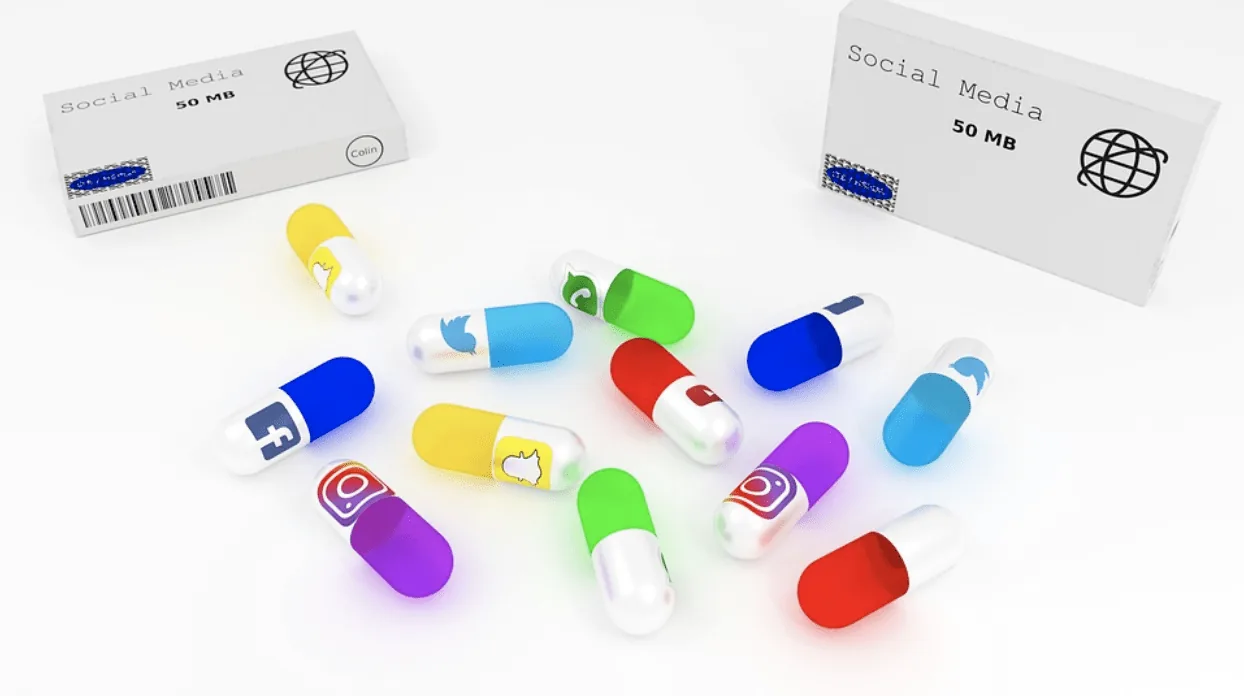
Behavioral addictions — gambling, shopping, sex, gaming, food, exercise, work, internet/social media — engage the same brain rewar…
Read article
Mental Health Awareness Month (May) is an annual observance dedicated to raising awareness about mental health, reducing stigma, a…
Read article